


Cleanroom Filtration & Clean Bench Systems in Malaysia
From a single laminar flow clean bench to an FFU ceiling system or a localised clean booth, EEPS Engineering provides an integrated solution based on your process, available space, airflow requirements and cleanliness target.
- Horizontal and vertical laminar flow clean bench installation
- Cleanroom FFU installation, airflow distribution and filter integration
- HEPA and ULPA filter replacement, testing and commissioning
- Clean booth and localised clean zone installation
- Support for facilities in Selangor, Kuala Lumpur and throughout Malaysia
Clean Bench and FFU Installation for Critical Work Areas
A clean bench protects a specific work surface, while an FFU system supplies filtered air to a larger clean zone or cleanroom. A clean booth combines FFUs, a supporting frame and enclosure materials to create a localised clean area within an existing facility.
EEPS evaluates the application before recommending equipment. This helps ensure that the proposed system fits the actual process instead of treating a clean bench, clean booth and complete cleanroom as interchangeable products.
Our scope can include design coordination, equipment supply, supporting framework, electrical connection, controls, HEPA or ULPA filtration, installation, airflow checks and commissioning.
What Cleanroom Filtration Solutions Does EEPS Provide?
EEPS provides three distinct solutions: laminar flow clean benches for product protection, FFU filtration systems for room-level air control, and clean booths for localised clean zones.
Laminar Flow Clean Benches
A laminar flow clean bench supplies HEPA- or ULPA-filtered air across the work surface to reduce particle exposure during sensitive operations.
Horizontal airflow moves filtered air from the rear of the cabinet towards the operator. Vertical airflow moves air downward from the top filter section towards the work surface.
- Horizontal or vertical laminar airflow
- HEPA or ULPA filter configuration
- Stainless-steel or coated construction options
- Lighting and fan speed controls
- Custom sizing based on process requirements
- Installation, airflow checking and commissioning
FFU & Cleanroom Filtration Systems
A fan filter unit combines a fan and high-efficiency filter to deliver filtered air through a cleanroom ceiling, clean booth or controlled production area.
The quantity and arrangement of FFUs should be planned according to room size, heat load, process layout, return-air path and the required cleanliness level.
- New FFU system installation
- FFU additions for existing cleanrooms
- HEPA and ULPA filter integration
- Airflow distribution and return-air planning
- Filter replacement and maintenance access
- Controls, electrical connections and commissioning
Clean Booth & Localised Clean Zones
A clean booth creates a controlled clean zone inside an existing production floor without constructing a complete cleanroom around the entire facility.
It can be a practical option for inspection, assembly, packaging or other processes that require particle control within a limited working area.
- FFU ceiling or top-mounted filtration
- Aluminium, coated-steel or stainless-steel framework
- Anti-static PVC curtain or strip curtain enclosure
- Integrated lighting and control box
- Adjustable support and levelling arrangement
- On-site installation and functional checks
How Does a Clean Booth Create a Controlled Work Area?
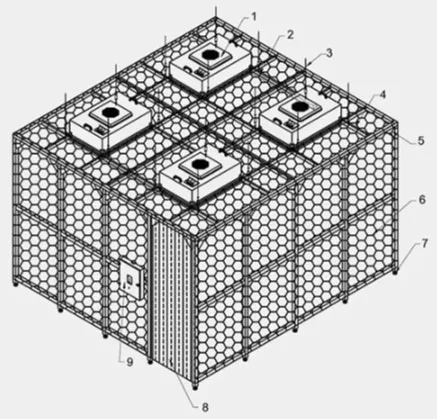
A clean booth uses ceiling-mounted FFUs to supply filtered air into an enclosed or partially enclosed working zone. The enclosure helps separate the critical process from the surrounding factory environment.
Depending on the application, the booth may include rigid panels, anti-static PVC curtains, strip curtain access, lighting, a control panel and an aluminium or stainless-steel supporting frame.
The final configuration should consider operator movement, material transfer, equipment heat load, ceiling clearance and the position of surrounding return-air paths.
What Is the Difference Between a Clean Bench, Clean Booth and Full Cleanroom?
The main difference is the size and purpose of the controlled area. A clean bench protects one work surface, a clean booth creates a larger local zone, and a full cleanroom controls an entire enclosed room.
| Solution | Controlled Area | Typical Use | Key Consideration |
|---|---|---|---|
| Laminar Flow Clean Bench | Individual work surface | Inspection, preparation, assembly and product handling | Primarily protects the product or sample |
| Clean Booth | Localised production or laboratory zone | Assembly, packaging, inspection or equipment enclosure | Requires suitable airflow and surrounding facility conditions |
| Full Cleanroom | Complete enclosed room or facility | Processes requiring room-wide contamination control | Requires integrated HVAC, pressure, finishes and monitoring |
| FFU Upgrade | Existing cleanroom or selected ceiling area | Increasing filtered-air coverage or replacing ageing units | Must be checked against return airflow and room balance |
Important: A Clean Bench Is Not a Biosafety Cabinet
A standard clean bench is designed to protect the product or sample from airborne contamination. It normally does not protect the operator or surrounding environment from biological agents, hazardous aerosols or toxic substances. Applications involving operator protection should be assessed for an appropriate biosafety or containment solution.
How Does an FFU Cleanroom Filtration System Work?
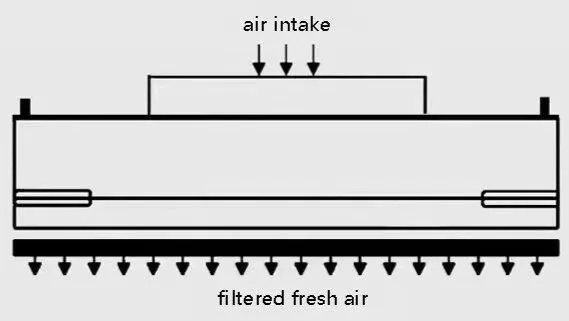
An FFU draws air through its intake, moves it through a HEPA or ULPA filter and supplies filtered air into the clean space below. Multiple FFUs can be arranged across a ceiling grid to improve filtered-air coverage.
The FFU layout should support consistent downward or directional airflow while allowing contaminated air to leave the work zone through a suitable return-air route.
Filter performance alone does not determine whether a clean area will perform correctly. Air volume, room leakage, equipment placement, personnel movement and pressure relationships also affect particle control.
Available Clean Bench and Cleanroom Filtration Features
Each installation can be configured around the required work area, construction material, airflow direction, filtration level and site operating conditions.
HEPA or ULPA Filtration
Filter selection can be matched to the cleanliness objective, equipment design and required airflow resistance.
FFU Airflow Control
Fan controls help adjust airflow performance and can support balancing across multiple filtration units.
Horizontal or Vertical Flow
Airflow direction is selected according to the work process, equipment arrangement and contamination risk.
Anti-Static Options
Anti-static curtains and suitable material options are available for electronics and sensitive manufacturing areas.
Cleanliness Target Planning
The design can be developed around the project cleanliness target and applicable facility requirements.
Testing and Commissioning
Post-installation checks can include airflow inspection, filter condition checks and functional verification.
Can EEPS Install FFUs in an Existing Cleanroom?
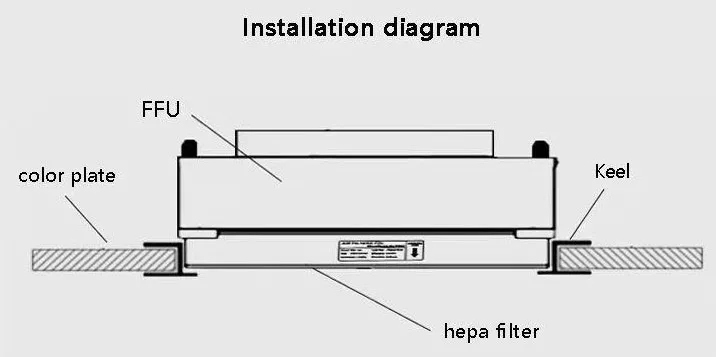
Yes. EEPS can assess an existing cleanroom or controlled area for FFU installation, replacement or expansion. The assessment should confirm ceiling-grid dimensions, available electrical supply, structural support, access space and return-air conditions.
Before adding more FFUs, it is important to understand whether the existing room can accommodate the additional airflow. Installing extra units without reviewing the return-air path may affect pressure balance or create unwanted turbulence.
EEPS can coordinate FFU mounting, HEPA filter placement, electrical connections, control arrangements and post-installation checks as one project scope.
What Is Included in EEPS Clean Bench and FFU Installation?
EEPS supports the project from site review and solution selection through installation, functional checking and handover.
Site Assessment
We review the available space, ceiling conditions, equipment layout, workflow, electrical supply and intended clean process.
Solution Selection
EEPS recommends a clean bench, FFU system, clean booth or complete cleanroom solution based on the controlled area required.
Design and Coordination
The system arrangement is coordinated with the supporting structure, electrical supply, lighting, controls and surrounding services.
Supply and Installation
Equipment, filters, framework, enclosures and accessories are installed according to the agreed project scope.
Testing and Adjustment
The team performs functional checks and makes necessary adjustments before the system is released for operation.
Handover and Support
EEPS provides operating guidance and can support future filter replacement, maintenance or system modification.
Where Are Clean Benches and FFU Systems Used?
Clean benches, FFUs and clean booths are used where airborne particles may affect product quality, yield, inspection accuracy or process consistency.
- Semiconductor manufacturing
- Electronics assembly
- Precision component inspection
- Optical product handling
- Medical device production
- Pharmaceutical processing
- Biotechnology and laboratories
- Controlled packaging operations
What Information Is Needed Before Selecting a System?
The most suitable solution depends on what must be protected, how large the clean area is and how the process interacts with the surrounding environment.
Process and Product
Identify the product, sample or operation being protected and the type of contamination that may affect it.
Required Clean Area
Confirm whether control is needed over one bench, one machine, one production zone or an entire enclosed room.
Airflow Direction
Evaluate whether horizontal, vertical or room-level unidirectional airflow best suits the workflow.
Room Conditions
Existing temperature, humidity, pressure, return air and surrounding particle levels can influence performance.
Material and ESD Needs
Electronics applications may require anti-static curtains, suitable work surfaces or integration with an ESD-controlled floor.
Maintenance Access
Allow sufficient access for filter replacement, fan servicing, cleaning and future equipment changes.
Related Systems for a Complete Cleanroom Project
Filtration works best when it is coordinated with the room envelope, flooring, utilities, HVAC and production equipment. EEPS can support these related systems as part of an integrated project.
Why Choose EEPS for Clean Bench and FFU Installation in Malaysia?
EEPS provides an engineering-led service instead of supplying filtration equipment without considering its installation environment.
End-to-End Scope
Design coordination, supply, installation, controls, testing and support can be managed under one project scope.
Local Site Support
EEPS supports industrial and cleanroom facilities in Selangor, Kuala Lumpur and other locations in Malaysia.
Custom Configuration
System size, material, filter type, airflow arrangement and enclosure can be adapted to the application.
Integrated Engineering
Filtration can be coordinated with HVAC, flooring, electrical works and process utility hook-up requirements.
Clean Bench and FFU Installation FAQ
These answers address common questions from procurement teams, engineers, facility managers and cleanroom users.
Plan Your Clean Bench, FFU or Clean Booth Installation
Send EEPS your available layout, clean area dimensions, intended process, required cleanliness target and site location. Our team can review the application and recommend a suitable design, supply and installation scope.
In summary,
EEPS provides clean bench and FFU installation in Malaysia for businesses that need reliable particle control at a workstation, local production zone or complete cleanroom level. The right solution starts by defining the area that needs protection, the required airflow and the intended process before selecting the equipment.