


How Rib and Upper Back Stiffness Can Affect Shoulder Movement
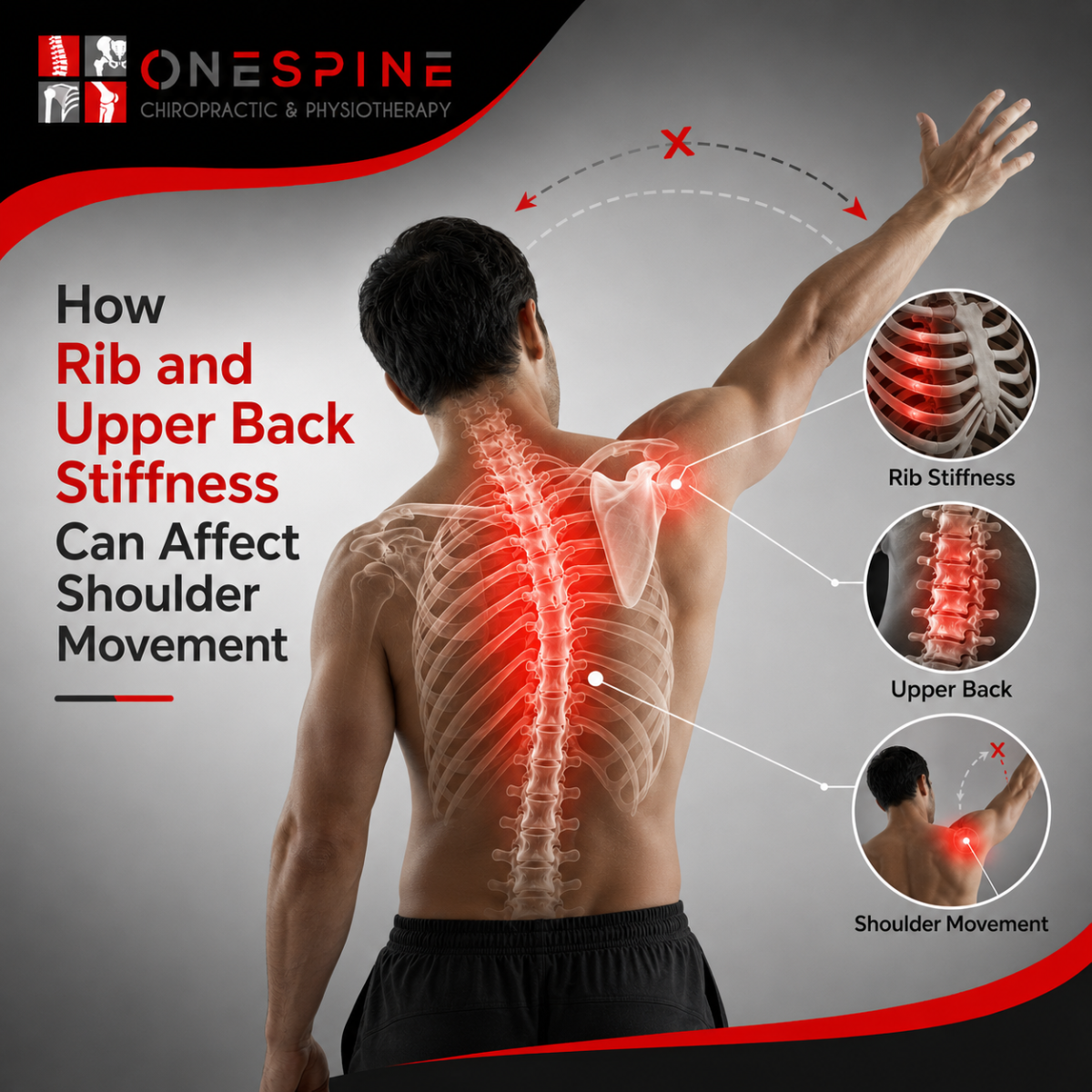
Rib and upper back stiffness can affect shoulder movement because the shoulder depends on the rib cage, shoulder blade and thoracic spine to move properly. At One Spine Chiropractic & Physiotherapy, we help patients in KL, PJ and TTDI assess whether stiffness around the ribs and upper back, poor scapular control, posture strain or muscle tension is limiting shoulder movement.
Many people assume shoulder pain comes only from the shoulder joint. In reality, overhead reaching, lifting and sports movements rely on the shoulder joint, shoulder blade, rib cage and upper back working together.
Why the Ribs and Upper Back Matter for Shoulder Movement
The shoulder does not move independently. Healthy shoulder movement depends on coordination between the shoulder joint, shoulder blade, rib cage, upper back and surrounding muscles.
When the ribs or upper back become stiff, the shoulder may compensate. Over time, this can make reaching, lifting, overhead movement, gym training, badminton, swimming and daily activities feel tight, painful or restricted.
When Shoulder or Upper Back Pain Needs Urgent Medical Attention
Shoulder stiffness is often musculoskeletal, but some symptoms need urgent medical care. Safety screening is important before starting chiropractic or physiotherapy treatment.
Seek urgent care if shoulder, chest, arm or upper back pain comes with:
- Chest pressure or chest tightness
- Shortness of breath
- Sweating, dizziness or nausea
- Sudden severe pain
- Weakness, numbness or loss of coordination
- Pain after a fall, accident or major injury
- Fever, unexplained weight loss or severe night pain
If symptoms suggest a medical issue, nerve involvement, trauma or non-musculoskeletal concern, our team may recommend medical assessment first.
How Rib and Upper Back Stiffness Affects the Shoulder
Rib and upper back stiffness can limit shoulder movement by changing how the shoulder blade and spine work together. This can place extra stress on the shoulder joint, neck and upper back muscles.
| Restricted Area | How It Affects Shoulder Movement | Common Symptoms |
|---|---|---|
| Upper back stiffness | Limits rotation and extension needed for reaching | Reduced overhead movement, shoulder tightness |
| Rib cage restriction | Affects shoulder blade movement and muscle control | Pain around the shoulder blade, tight upper back |
| Poor scapular control | Reduces smooth shoulder blade movement | Clicking, weakness, poor lifting control |
| Posture strain | Changes shoulder blade position and increases shoulder load | Neck tension, shoulder heaviness |
| Muscle tension | Makes neck, shoulder and upper back muscles overwork | Fatigue, tightness, recurring discomfort |
For mobile users, the same pattern can be understood simply: stiff upper back limits reach, stiff ribs affect shoulder blade movement, poor scapular control reduces smooth overhead motion, and muscle tension makes the shoulder work harder.
Why We Do Not Assess the Shoulder Alone
Our team does not assess the painful shoulder alone because the shoulder often reflects a wider movement issue. A shoulder that feels tight during overhead reach may be compensating for limited thoracic extension, stiff ribs, poor shoulder blade control or posture strain.
That is why we may check shoulder range of motion, shoulder blade control, thoracic rotation and extension, rib movement, posture, muscle tightness and daily movement habits before recommending care.
1. The Shoulder Works as Part of a System
The shoulder relies on the shoulder joint, shoulder blade, rib cage and upper back working together. If one part becomes restricted, the shoulder may lose smooth movement.
For example, when the upper back cannot extend well, the shoulder may struggle during overhead reaching. When the rib cage does not move properly, the shoulder blade may not glide efficiently.
This can lead to:
- Shoulder stiffness
- Pain with reaching or lifting
- Reduced overhead movement
- Tightness around the shoulder blade
- Neck and shoulder tension
- Discomfort during exercise or sports
For a broader explanation of connected upper body pain, our guide on how neck, shoulder and back pain are connected explains why discomfort often spreads instead of staying in one area.
2. Reduced Upper Back Mobility Can Limit Shoulder Range
The upper back, also called the thoracic spine, needs to rotate and extend during daily activities. Reaching overhead, lifting objects, turning the body and playing sports all require proper upper back movement.
When the upper back is stiff, the shoulder may move more than it should. This can create extra load on the shoulder joint and surrounding muscles.
Common signs include:
- Difficulty reaching overhead
- Stiffness when twisting the upper body
- Tightness between the shoulder blades
- Shoulder pain during lifting
- Reduced range of motion
- Pain that returns after stretching the shoulder only
Our team may assess upper back movement together with neck pain and stiffness because neck, shoulder and thoracic mobility often influence each other.
3. Rib Cage Restrictions Can Change Shoulder Blade Movement
Rib cage restriction means stiffness around the ribs and upper back that affects how the shoulder blade moves. The ribs provide a stable foundation for the muscles that control the shoulder blade.
When rib movement is restricted, the shoulder blade may not rotate, tilt or glide efficiently. This can increase strain on the shoulder joint and surrounding muscles.
Rib-related movement restriction may contribute to:
- Shoulder blade tightness
- Pain between the shoulder blades
- Reduced shoulder control
- Stiffness with rotation
- Difficulty with overhead activities
- Upper back and shoulder fatigue
Our team may assess rib cage movement, breathing mechanics, upper back mobility and shoulder blade control to understand whether the shoulder is compensating for hidden restrictions.
4. Increased Muscle Tension Can Overload the Shoulder
When the ribs and upper back do not move well, muscles around the neck, shoulders and upper back often work harder to compensate. This may cause tightness, fatigue and discomfort.
The body may use tight muscles to create stability when joints are not moving efficiently. This means stretching alone may provide temporary relief but may not solve the underlying movement problem.
Muscle tension may feel like:
- Shoulder heaviness
- Tight upper back
- Neck and shoulder tension
- Fatigue during lifting or exercise
- Trigger points around the shoulder blade
- Pain that improves briefly but returns
Our team may check muscle tightness and trigger points to understand whether tight muscles are the main issue or a sign of compensation.
5. Limited Mobility May Increase Shoulder Pain Risk
Limited rib and upper back mobility may increase stress on the shoulder over time. This can contribute to reduced range of motion, poor shoulder mechanics and recurring shoulder discomfort.
This does not mean every shoulder problem starts from the ribs or upper back. However, these areas should be assessed when shoulder pain keeps returning, especially if shoulder-only stretching or treatment has not provided lasting improvement.
Possible patterns include:
- Shoulder pain during overhead movement
- Pain with pressing, throwing or swimming
- Repeated tightness between the shoulder blades
- Limited mobility despite stretching
- Shoulder discomfort linked to upper back stiffness
- Recurring neck and shoulder tension
For condition-specific information, our related page on shoulder impingement and rotator cuff issues explains common shoulder pain patterns in more detail.
Local Example: A PJ Badminton Player With Overhead Shoulder Tightness
A common scenario is a PJ badminton player who feels shoulder tightness during overhead shots. The shoulder may feel weak or restricted, but the deeper issue may involve stiff upper back rotation, limited rib movement and poor shoulder blade control.
In this type of case, our team may assess the shoulder, rib cage and thoracic spine together. This helps us understand whether the shoulder is truly the main problem or whether it is compensating for stiffness elsewhere.
Signs Rib and Upper Back Stiffness May Be Affecting Your Shoulder
Rib and upper back stiffness may be involved if your shoulder feels restricted even though the pain is not only in the shoulder joint. Symptoms often appear during reaching, lifting, sports or long sitting.
Common signs include:
- Difficulty reaching overhead
- Shoulder pain during lifting or sports
- Tightness between the shoulder blades
- Reduced shoulder range of motion
- Stiffness when twisting or rotating the upper body
- Neck and shoulder tension that keeps returning
- Shoulder discomfort that does not improve with shoulder stretches alone
For desk workers, drivers and students, posture-related strain may also contribute. Our resources on
desk job shoulder and neck tension forward head posture poor posture and rounded shouldersOur Rib, Upper Back and Shoulder Assessment Approach
Our team uses an assessment-based approach to identify whether shoulder limitation is coming from the shoulder joint itself or from connected areas such as the ribs, upper back, neck or posture.
1. Symptom Pattern Review
We ask where the pain is felt, what movements are limited, when symptoms started and whether pain appears during reaching, lifting, twisting, sports, desk work or sleep.
2. Shoulder and Shoulder Blade Movement Check
We assess shoulder range of motion, shoulder blade control and how the shoulder moves during overhead or functional movements.
3. Rib Cage and Upper Back Mobility Assessment
We check thoracic rotation, thoracic extension, rib cage movement, spinal stiffness and whether restricted mobility may be forcing the shoulder to compensate.
4. Muscle, Posture and Care Planning
We assess muscle tightness, posture, strength, movement control and daily habits. If the issue appears musculoskeletal, we may recommend chiropractic care, physiotherapy, posture correction or rehabilitation. If symptoms suggest injury, nerve involvement or another medical concern, we may recommend further assessment or referral.
How One Spine Chiropractic & Physiotherapy Can Help
At One Spine Chiropractic & Physiotherapy, we support shoulder movement by assessing the full movement system, not only the painful shoulder area. Our care may focus on improving rib and upper back mobility, reducing muscle tension, improving posture and restoring better shoulder control.
Depending on your assessment, care may include:
- Chiropractic care to support thoracic spine and rib joint mobility
- Physiotherapy to improve flexibility, strength and movement control
- Soft tissue therapy to reduce tightness in overworked muscles
- Posture correction to reduce unnecessary strain
- Rehabilitation exercises to improve shoulder stability and upper back mobility
For more details about our location and care approach, visit our chiropractic center in Petaling Jaya. Book an assessment with our team to check whether rib, upper back or shoulder blade restrictions may be affecting your movement.
Visit Our Chiropractic Center in Petaling JayaYou may also read about our chiropractic treatment in KL and physiotherapy services in KL and Petaling Jaya.
Why Early Assessment Matters
Early assessment helps identify hidden restrictions before the shoulder becomes more overloaded. When the ribs, upper back and shoulder blade move better, the shoulder often has a stronger foundation for pain-free movement.
Key benefits may include:
- Improved shoulder range of motion
- Reduced upper back and shoulder stiffness
- Better shoulder blade control
- Improved posture and movement quality
- Lower risk of recurring shoulder pain
- Better comfort during lifting, reaching, sports and daily activity
FAQ
Conclusion
In summary, rib and upper back stiffness can affect shoulder movement by limiting thoracic mobility, changing shoulder blade mechanics and increasing muscle tension. At One Spine Chiropractic & Physiotherapy, our team in KL, PJ and TTDI helps identify hidden restrictions and supports better shoulder function through assessment-based chiropractic care, physiotherapy, posture correction and rehabilitation.



