


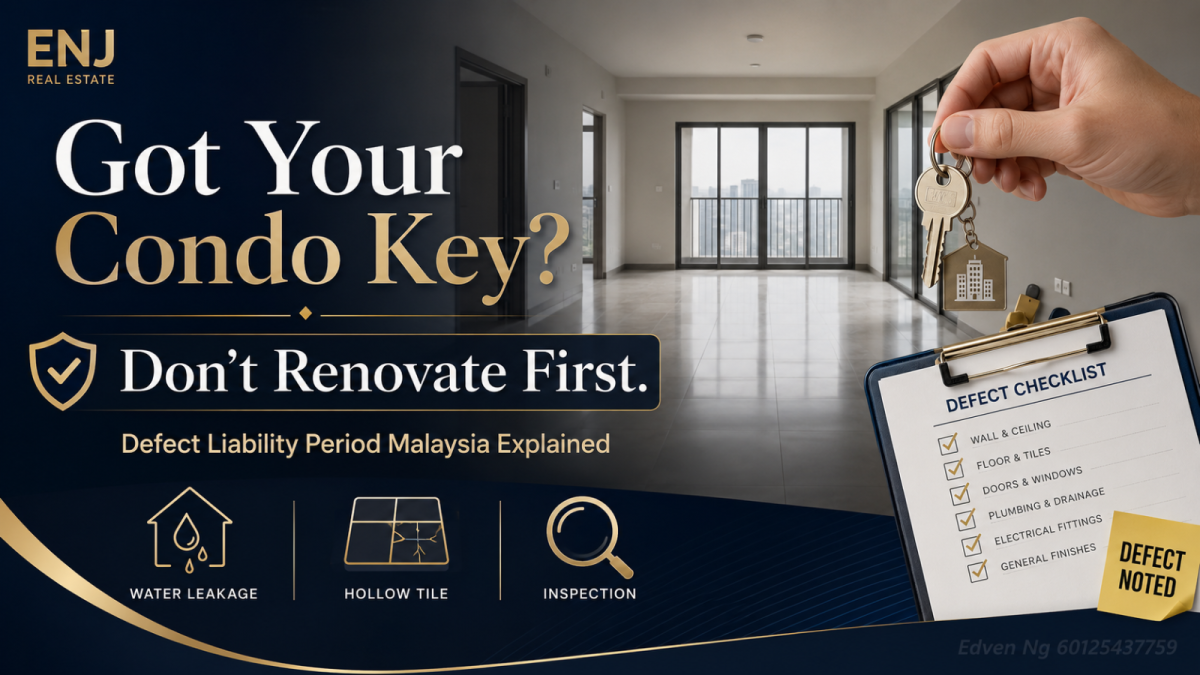
Defect Liability Period Malaysia: What New Condo Buyers Must Check After Key Collection
A professional buyer guide to vacant possession, DLP, defect inspection, developer repair process and post-handover planning for apartment and condominium buyers in Malaysia.
Quick Answer
Defect Liability Period, also known as DLP, is the protection period after vacant possession where buyers can report defects, shrinkage, poor workmanship or faults to the developer for rectification.
For new apartment and condominium buyers in Malaysia, DLP is important because many problems are only discovered after the buyer receives the key and starts inspecting the unit. Common issues include water leakage, hollow tiles, wall cracks, poor finishing, window defects, plumbing issues, electrical issues and common-area defects.
The most important rule for buyers: do not rush renovation immediately after key collection. Inspect first, record properly, submit defects in writing, and follow up before starting renovation or heavy fitting works.

Strong Buyer Warning
Getting your key does not mean the unit is perfect. Vacant possession is only the beginning of your inspection stage. If you miss the defect reporting process, you may lose time, evidence and repair leverage.
1. What Is Defect Liability Period?
Defect Liability Period is a period after vacant possession where the developer is responsible to repair certain defects, shrinkage or faults that appear in the property, provided the issue falls within the scope of the SPA, building plans, approved description and workmanship or material obligations.
In simple buyer language, DLP works like a new property warranty period. It gives buyers time to inspect the unit after handover and report defects to the developer for rectification.
DLP Period
Usually understood as 24 months from vacant possession for new residential properties under the standard housing framework.
Repair Response
Developers are commonly expected to make good notified defects within 30 days after receiving proper written notice.
Best Inspection Window
Buyers should inspect and submit the first defect list as early as possible after key collection.
2. What Is Vacant Possession?
Vacant possession, commonly called VP, is the stage where the developer delivers possession of the unit to the buyer. For condominium and apartment buyers, this is usually when the buyer is invited to collect keys and start the handover process.
For strata residential properties under Schedule H, vacant possession is commonly linked to the delivery timeline stated in the signed SPA. Buyers should always check their own SPA and consult their lawyer for the exact legal deadline and rights.
| Term | Simple Meaning | Buyer Action |
|---|---|---|
| Vacant Possession | The developer hands over the unit to the buyer. | Collect keys, inspect unit, check documents and start defect reporting. |
| CCC | Certificate of Completion and Compliance related to building completion. | Check whether handover documents are complete before planning move-in or rental. |
| DLP | Defect reporting and rectification period after VP. | Submit defects properly and follow up until rectified. |
| Maintenance Fee | Monthly cost for common property management after VP. | Prepare for maintenance fee, sinking fund and utility deposits after key collection. |
3. Why Defect Inspection Matters Before Renovation
Many buyers are excited after getting keys and immediately plan renovation, furniture installation or rental setup. This can create problems if defects are not inspected first.
Once renovation starts, it may become difficult to prove whether a defect came from the developer’s workmanship or from renovation activity. For example, if you hack walls, install cabinets, change plumbing or modify electrical works before submitting defects, the developer may dispute responsibility for certain issues.
Important Rule
Inspect first. Submit defects first. Take photos and videos first. Only begin renovation after major defect issues are recorded and the developer’s rectification process is underway.
4. Common Condo Defects Buyers Should Check
| Area | Common Defects | How To Check |
|---|---|---|
| Flooring | Hollow tiles, uneven tiles, cracked tiles, chipped edges, poor skirting. | Tap tiles with a coin or tile-tapping tool, check level and mark hollow or cracked areas. |
| Walls & Ceiling | Hairline cracks, uneven plaster, poor paint, water stain, damp patches. | Inspect under natural light and flashlight; take wide and close-up photos. |
| Windows & Sliding Doors | Water seepage, loose frame, difficult sliding, poor lock, glass scratch. | Open and close repeatedly; check sealant, lock and frame alignment. |
| Bathroom | Poor drainage slope, leaking basin, weak water pressure, faulty WC, smell trap issue. | Run water, test drainage, flush WC, check under basin and inspect floor trap. |
| Kitchen & Yard | Water point issue, poor floor trap, uneven wall, leaking pipe, missing cover. | Test water points and drainage; check pipe area and tile finishing. |
| Electrical | Non-working socket, wrong switch, tripping, missing cover, loose fitting. | Use socket tester or ask electrician to test before renovation. |
| Door & Ironmongery | Door cannot close properly, misalignment, scratches, poor lock, gap issue. | Open and close every door; test every lock and handle. |
| Balcony | Water ponding, railing defect, cracked tiles, poor drainage, leakage risk. | Check drainage outlet, balcony slope, railing stability and tile condition. |

5. Serious Defects Buyers Should Not Ignore
Some defects are cosmetic and easier to repair. Others may affect safety, long-term maintenance cost and future resale. Buyers should pay extra attention to defects related to water, electrical safety, waterproofing and structural finishing.
Water Leakage
Leakage from ceiling, windows, bathroom, balcony or external wall can become expensive if not handled early.
Bathroom Waterproofing Issue
Wet area waterproofing defects can affect your unit or the unit below, creating long-term dispute risk.
Electrical Safety Issue
Faulty sockets, tripping or exposed wiring should be treated seriously before any renovation or tenant move-in.
Drainage / Ponding
Water that does not flow properly can cause smell, stains, seepage or future leakage.
Major Hollow Tile Area
Large hollow tile areas may lead to popping tiles, cracking or uneven flooring after move-in.
Window Frame Seepage
Window leakage is common in high-rise properties and should be checked before curtains, cabinets or built-ins are installed.
6. How To Submit Defect Claim Properly
A defect claim should be properly documented. Do not only send casual WhatsApp messages without a complete record. Buyers should submit defects through the developer’s official defect form, portal, email or required handover process.
| Step | What To Do | Why It Matters |
|---|---|---|
| 1. Inspect systematically | Check room by room: entrance, living, balcony, bedrooms, bathrooms, kitchen and yard. | Prevents missing defects. |
| 2. Mark defects physically | Use defect stickers or masking tape to mark the exact defect location. | Helps contractor locate the issue quickly. |
| 3. Take photo and video | Capture wide shot, close-up and unit/floor reference. | Creates evidence for follow-up. |
| 4. List clearly | Write defect item, location, description and photo number. | Reduces misunderstanding. |
| 5. Submit in writing | Use developer’s official channel and keep acknowledgement. | Protects your timeline and record. |
| 6. Follow up | Check repair progress and re-inspect after rectification. | Some repairs may need second round correction. |
Simple Defect Report Format
Unit: A-12-08
Area: Master Bathroom
Defect: Water ponding near floor trap
Description: Water does not flow fully to the floor trap after shower test
Evidence: Photo 12A / Video 12B
Request: Please rectify drainage slope and retest after repair
7. Buyer Timeline After Key Collection
| Timeline | Buyer Action | ENJ Advisor Note |
|---|---|---|
| Day 1–3 | Collect key, check handover documents, inspect meters, access card and parking details. | Do not rush renovation. Start with inspection. |
| Day 3–14 | Conduct full defect inspection and record photos/videos. | Use daylight and check wet areas carefully. |
| Day 7–30 | Submit official defect list to developer. | Written submission is important for record. |
| After submission | Follow up repair schedule and allow developer contractor to rectify. | Track dates and keep proof of communication. |
| After repair | Re-inspect every repaired item before accepting completion. | Do not assume all repairs are properly completed. |
| Before renovation | Confirm major defects are rectified or properly recorded. | Protect yourself before installing built-in furniture. |

8. What If Developer Does Not Repair?
If the developer does not repair defects within the required period after proper written notice, buyers may have further rights under the SPA and housing framework. In many situations, buyers may be able to escalate the matter, seek formal legal advice, or recover repair cost according to the applicable process.
However, buyers should not simply repair first without proper notice, quotation, evidence and legal understanding. Always keep written records and consult your lawyer if the issue becomes serious.
Important Legal Reminder
This article is general buyer education, not legal advice. For serious defects, non-response, safety issues or cost recovery, consult your appointed lawyer and refer to your signed SPA.
9. Defect Inspection Tools To Prepare
Basic Tools
Masking tape, marker pen, notebook, phone camera, charger, measuring tape and flashlight.
Water Test Tools
Small pail, water bottle, tissue paper and plastic bag to test drainage and leakage points.
Electrical Tools
Socket tester or electrician support to test socket, DB box and switches safely.
Finishing Check Tools
Tile tapping tool, level ruler, small mirror and bright light to inspect workmanship.
10. Buyer Case Study: Why Early Inspection Saves Money
Case Example: Buyer Wants To Rent Out Immediately After VP
Situation: A buyer receives keys for a new condominium and wants to install curtains, cabinets and furniture quickly to rent out the unit.
Problem: During inspection, the buyer finds window seepage, bathroom ponding and several hollow tiles. If renovation starts immediately, contractors may cover some areas and make evidence unclear.
Better Strategy: Submit defects first, keep full photo/video records, allow developer rectification, then start renovation after major wet-area and window issues are addressed.
ENJ Advisor Opinion: A 2-week delay for inspection can protect thousands of ringgit in future repair risk, especially for rental units where tenants may complain later.
11. ENJ Project Comparison Direction
For buyers comparing new launch or under-construction projects, DLP and handover quality should be part of the decision. Do not compare only price, rebate, facilities or floor plan. A good buying decision should also consider developer track record, construction quality, defect response, maintenance planning and handover support.
Causewayz Square JBCC
Suitable for buyers studying city-centre, CIQ / RTS rental strategy. Buyers should plan inspection, furnishing and rental setup immediately after VP.
Coronade Twins
Suitable for buyers comparing freehold city-centre serviced residence near CIQ and RTS. Handover planning should include defect inspection and rental-readiness strategy.
The Celestz @ Kebun Teh
Suitable for buyers comparing city-fringe apartment living and rental flexibility. Buyers should prepare defect inspection, furnishing budget and post-VP cash flow early.
The Asteriaz @ Kebun Teh
Suitable for buyers comparing city-fringe residential demand, handover planning, rental setup and longer-term ownership strategy.
ENJ Advisor Summary
Defect Liability Period is one of the most important buyer protection stages after key collection. A smart buyer does not only ask “When can I get the key?” but also asks “How should I inspect, report, follow up and protect my unit before renovation?”
ENJ Real Estate helps buyers understand vacant possession, defect inspection, DLP process, renovation planning, rental setup and post-handover strategy before making a purchase decision.
FAQ: Defect Liability Period Malaysia
What is Defect Liability Period in Malaysia property?
Defect Liability Period is a period after vacant possession where buyers can report defects, shrinkage or faults to the developer for rectification, subject to the SPA and applicable housing regulations.
How long is DLP for new condo in Malaysia?
For new residential properties, DLP is commonly understood as 24 months from the date of vacant possession under the current housing framework. Buyers should always confirm the exact clause in their signed SPA.
What defects can I report during DLP?
Common defects include water leakage, hollow tiles, wall cracks, poor paint finishing, window seepage, plumbing issues, electrical issues, drainage problems and door or lock defects.
Should I renovate before submitting defects?
It is better to inspect and submit defects before renovation. Renovation may make it harder to prove whether an issue came from developer workmanship or later renovation activity.
How do I submit a defect claim?
Buyers should submit defects through the developer’s official defect form, portal, email or handover process. Include photos, videos, unit number, defect location, description and date of submission.
What if the developer does not repair my defects?
If the developer does not respond or repair properly, buyers should keep written records, follow up formally, refer to the SPA and seek legal advice for serious or unresolved defects.
Reference Notes: This article is based on Malaysia residential property buyer guidance, Schedule H / housing purchase framework, defect liability period principles, developer repair obligations, vacant possession practices and ENJ Real Estate buyer advisory experience. Buyers should always refer to their signed SPA, developer handover documents and appointed lawyer for case-specific advice.
Need Help After Key Collection?
Before you renovate or rent out your new condo, ENJ Real Estate can help you understand the handover process, defect inspection checklist, DLP timeline, furnishing planning and rental setup strategy.
WhatsApp Edven Ng: +60 12-543 7759
WhatsApp Josephine Sia: +60 11-1686 6690