- Utsource Holding Company Limited
- Home
- Products (39557)
- News
- Map
- Contact
- Web Statistic
- VISITORS:


Please login to use this feature.
You can use this feature to add the product to your favourite list.
Close
You have added this product to your favorite list.
Check My Favourite
Close
You have removed this product from your favourite list.
Close
Please login to use this feature.
You can use this feature to add the company to your favourites list.
Close
This company has been added successfully.
Check My Favourite
Close
This company has been removed from your favourite list.
Close
Please login to use this feature.
You can use this feature to add the company to your inquiry cart.
Close
This company has been added to your inquiry cart.
Close
This company has been removed from your inquiry cart.
Close
This product has been added to your inquiry cart.
Close
This product has been removed from your inquiry cart.
Close
Maximum number of Product/Company has been reached in inquiry cart.
Close


Daily Login Reward
Congratulations!
You¡¯ve earned your daily login reward for today!
5 NP PointHere are the reward you¡¯ve earned!
Check your Daily Login Rewards
Be sure to come back everyday for more rewards!
Thanks!
Scan and Whatsapp Me
![qr code]() Note: Some mobile phone default QR scanners cannot scan to open the WhatsApp App directly.
Cancel
Note: Some mobile phone default QR scanners cannot scan to open the WhatsApp App directly.
Cancel


Location:
Business Nature:
Related Classifieds:
Methods for Assessing Varistor Condition - Utsource Holding Company Limited
Methods for Assessing Varistor Condition
26-Jun-2026
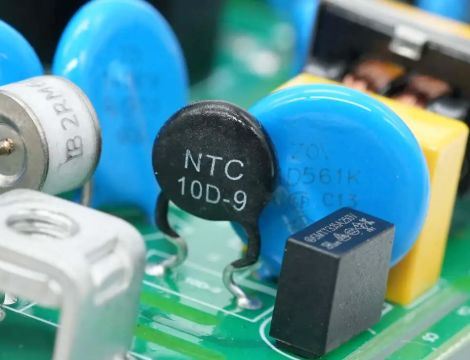
I. Working Principles and Characteristics of Varistors
A varistor is a resistive component with non-linear voltage-current characteristics, primarily made of zinc oxide (ZnO). Its core characteristic is that it exhibits a high-resistance state under normal voltage; however, when the voltage across its terminals exceeds a specific threshold (the varistor voltage), its resistance drops sharply, allowing it to shunt surge currents. This property makes it widely used for overvoltage protection in power supply circuits, communication equipment, and household appliances. Depending on the structure, common types include leaded (through-hole) and surface-mount (SMD) versions, with sizes ranging from 5mm to 40mm and varistor voltage ratings from 18V to 1800V. In practical applications, the varistor is connected in parallel with the circuit it protects, acting rapidly in response to transient overvoltages such as lightning strikes, electrostatic discharge (ESD), or switching surges.
II. Common Signs of Varistor Damage
1. Visual inspection is the most direct preliminary assessment method: A functional varistor should have a smooth surface free of cracks, with intact electrode plating. Damage can be confirmed if any of the following are observed:
¡ñ Visible cracks or scorch marks on the surface.
¡ñ Swelling or cracking of the encapsulation material.
¡ñ Detachment, oxidation, or discoloration of the electrodes.
¡ñ Overall deformation of the component.
2. Indications from circuit malfunctions:
¡ñ Equipment frequently restarts for unexplained reasons.
¡ñ Fuse blows without apparent cause.
¡ñ Overvoltage protection function fails.
¡ñ Scorch marks appear on the circuit board at the component's location.
III. Professional Testing Methods and Procedures
(I) Multimeter Testing Method
1. Off-circuit (offline) testing:
¡ñ Completely remove the varistor from the circuit board.
¡ñ Set the digital multimeter to the resistance measurement mode (20MΩ range).
¡ñ Under normal conditions, both forward and reverse resistance readings should exceed 50MΩ.
¡ñ If the resistance is below 1MΩ or indicates a short circuit, the component is damaged. 2. Preliminary in-circuit check:
¡ñ Measure resistance across the terminals after disconnecting power.
¡ñ Account for the influence of parallel components.
¡ñ Compare the resistance value with that of the same location on a known-good circuit.
(II) Varistor voltage test method
Use a dedicated tester for professional applications:
1. Connect the test fixture and set a 1mA constant current source.
2. Slowly increase the voltage until the current reaches 1mA.
3. The voltage reading at this point is the varistor voltage (V1mA).
4. A deviation of more than ±10% from the nominal value indicates a failure.
(III) Leakage current test method
1. Apply DC voltage equal to 75% of the varistor voltage.
2. Measure the current flowing through the device.
3. The normal value should be less than 20μA.
4. A value exceeding 50μA indicates performance degradation.
(IV) Capacitance test method
Measure using an LCR meter:
1. Select a test frequency of 1kHz.
2. The measured capacitance should match the nominal value.
3. A significant decrease in capacitance may indicate an internal fracture.
IV. Advanced testing techniques and precautions
1. Temperature characteristic test:
¡ñ Heat the component to 100°C using a hot air gun.
¡ñ Observe the rate of change in varistor voltage.
¡ñ For high-quality products, the rate of change should be less than 5%.
2. Multiple surge test:
¡ñ Simulate an 8/20μs lightning surge waveform.
¡ñ Apply the rated surge current 10 times.
¡ñ Parameter variation after testing should be less than 10%.
3. Testing environment requirements:
¡ñ Avoid strong electromagnetic interference.
¡ñ Maintain an ambient temperature of 25±5°C.
¡ñ Keep relative humidity below 70%.
V. Practical repair application cases
Case 1: A brand-name TV frequently blowing out its power supply chip
Testing steps:
1. Disassemble the unit and observe fine cracks on the varistor surface.
2. Measure resistance with a multimeter; the reading is only 3MΩ.
3. Replace with a new unit of the same model to resolve the fault.
Case 2: Industrial control system damaged by lightning strike
Analysis process:
1. Inspect the varistor; no external abnormalities are found.
2. Measure the varistor voltage; it has dropped by 30%. 3. Leakage current reached 120 μA.
4. The issue was diagnosed as performance degradation caused by repeated low-current surges.
VI. Selection and Usage Recommendations
1. Selection Principles:
¡ñ Varistor voltage: Select 1.5 to 2 times the circuit's operating voltage.
¡ñ Surge current capacity: Select 1.2 times the expected surge current.
¡ñ Prioritize products with UL and TUV certifications.
2. Installation Precautions:
¡ñ Place as close as possible to the component being protected.
¡ñ Keep lead length under 5 cm.
¡ñ Avoid mechanical stress.
¡ñ High-power applications require heat dissipation measures.
3. Maintenance Recommendations:
¡ñ Periodically test varistors in critical circuits annually.
¡ñ Inspect and replace after a lightning strike.
¡ñ Preventive replacement is recommended after 5 years of continuous use.
VII. FAQ
Q: How can I determine the condition without professional instruments?
A: Use an analog multimeter set to the R×10k range; if the needle deflects slightly and returns to infinity (∞), it is normal; if it stops in the middle, the component is damaged.
Q: What are the consequences of a varistor short circuit?
A: It may cause a power supply short circuit and blow the fuse; in severe cases, it can start a fire. Immediate replacement is required.
Q: Is there a difference between varistors of different colors?
A: Color merely indicates the packaging material used by different manufacturers; electrical parameters should be determined based on the model specifications.
By using the systematic testing methods and practical tips outlined above, even electronics enthusiasts can accurately assess the operating status of varistors. In practice, it is advisable to combine multiple testing methods for a comprehensive assessment and to establish a regular inspection schedule to ensure the overvoltage protection system remains in good working order. For critical equipment, consider a multi-stage protection scheme combining varistors with gas discharge tubes to provide more reliable overvoltage protection.
Main Office
Utsource Holding Company Limited 58474938-000-06-24-A
1111 Sullivan St Irvine, CA 92614 U.S.A.
Tel:
Email:
Website: https://www.utsource.us
Website: https://utsource.newpages.com.my/
Website: https://utsource.onesync.my/
Other Office
Mexico
Eje Central Lazaro Cardenas No.13 Piso 1005 Col.centro C.P.06050 Mexico£¬D.F.
Tel:
Tel:
Email:
Germany
Germany.
Tel:
Tel:
Email:
Hong Kong
FLAT/RM 22 5/F WAH LUEN CENTRE 15-21 WONG CHUK YEUNG STREET FOTAN NT HONG KONG.
Tel:
Email:
Browse by : Home - Classifieds - Companies - Location - Tags - Products - News & Promotion - Job Vacancy - Mobile Website - Google - SEO Results



