


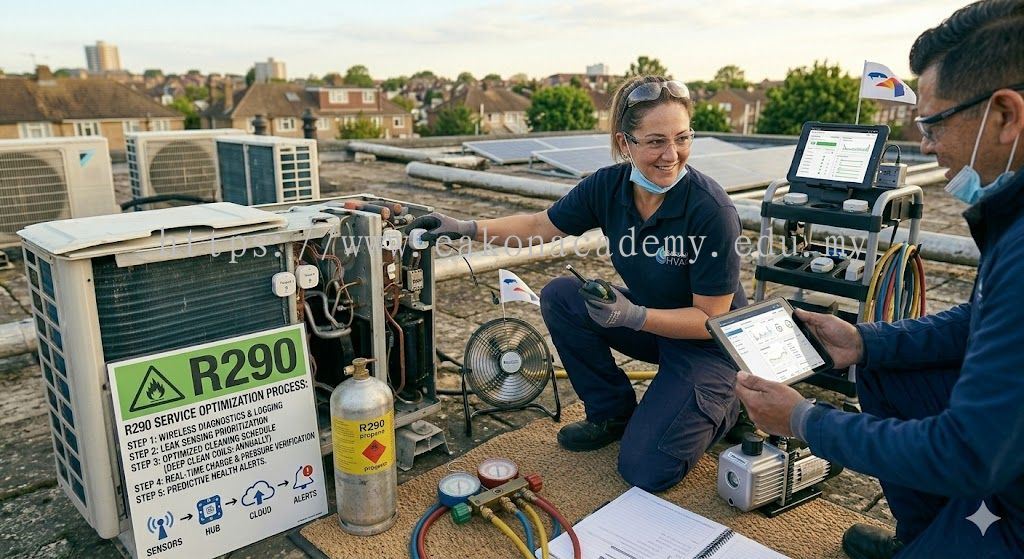
R290 SERVICING PROCESS OPTIMIZATION FOR HIGH-EFFICIENCY HVAC MAINTENANCE, SAFETY ENHANCEMENT, AND PROFESSIONAL SYSTEM PERFORMANCE IMPROVEMENT
R290 servicing process optimization refers to the systematic improvement of maintenance, repair, and operational procedures used in HVAC-R systems that utilize R290 (propane) as a natural hydrocarbon refrigerant. As the HVAC industry continues to adopt environmentally friendly refrigerants with low global warming potential (GWP), R290 has become increasingly important due to its high energy efficiency, strong cooling performance, and reduced environmental impact. However, because R290 is classified as a flammable refrigerant, optimizing servicing processes is essential to ensure safety, improve efficiency, reduce downtime, and maintain system reliability. At eakonacadem.edu.my, we provide professional HVAC education and technical training that supports the correct understanding and application of R290 servicing process optimization for industry professionals.
R290 servicing process optimization focuses on improving every stage of HVAC maintenance and repair to achieve maximum efficiency and safety. This includes system inspection, leak detection, refrigerant recovery, controlled charging, electrical safety procedures, ventilation management, preventive maintenance, workflow organization, and technician skill development. By optimizing these processes, HVAC professionals can reduce operational risks, improve service speed, and enhance overall system performance.
One of the most important aspects of R290 servicing process optimization is improving system inspection efficiency. Technicians must be trained to quickly and accurately assess HVAC components such as compressors, evaporators, condensers, piping, and control systems. Optimized inspection procedures help identify issues early, reduce diagnostic time, and prevent system failures.
Leak detection efficiency is another key area of optimization. Because R290 is flammable, accurate and fast leak detection is critical. Using advanced hydrocarbon-compatible detection tools and standardized procedures helps technicians locate leaks more efficiently while ensuring safety and minimizing refrigerant loss. Optimized leak detection reduces downtime and improves environmental protection.
Refrigerant recovery and charging processes are also central to servicing optimization. By using efficient recovery equipment and standardized charging procedures, technicians can reduce servicing time while ensuring safe and accurate refrigerant handling. Proper optimization ensures that R290 is recovered and recharged without waste, improving both safety and system efficiency.
Electrical safety procedures must also be optimized to ensure faster and safer servicing operations. Standardized isolation and inspection steps reduce the risk of electrical hazards while streamlining workflow. Proper optimization ensures that technicians can work safely without unnecessary delays.
Ventilation management is another important component of R290 servicing process optimization. Ensuring proper airflow in working environments helps reduce the risk of flammable gas accumulation while improving working efficiency. Optimized ventilation strategies enhance both safety and operational performance.
Preventive maintenance scheduling is also a key factor in process optimization. Regular and well-planned maintenance reduces unexpected breakdowns, extends equipment lifespan, and improves system reliability. Optimized maintenance schedules help HVAC systems operate more efficiently with fewer interruptions.
Technician training and skill development are essential for optimizing servicing processes. Well-trained technicians can perform tasks more efficiently, follow safety protocols accurately, and reduce service errors. Continuous training ensures that HVAC professionals stay updated with the latest R290 servicing techniques.
Workflow organization is another important aspect of R290 servicing process optimization. Proper planning, task sequencing, and resource management help reduce downtime and improve service productivity. Efficient workflow design ensures smoother servicing operations and better results.
At eakonacadem.edu.my, we emphasize the importance of professional HVAC education related to R290 servicing process optimization. Through structured training programs and hands-on practical learning, technicians gain the skills required to improve efficiency, safety, and performance in real-world HVAC systems using natural refrigerants.
Furthermore, optimized servicing processes support environmental sustainability by reducing refrigerant waste, minimizing emissions, and improving overall energy efficiency. Well-optimized R290 systems contribute to cleaner, safer, and more cost-effective HVAC operations.
In conclusion, R290 servicing process optimization is essential for ensuring safe, efficient, and high-performance HVAC-R system maintenance. By improving procedures for inspection, leak detection, refrigerant recovery, charging, electrical safety, ventilation, maintenance scheduling, and workflow management, HVAC professionals can significantly enhance system reliability and reduce operational risks. This comprehensive approach strengthens HVAC education and makes it a key focus area for training platforms like eakonacadem.edu.my.



