

Bubbling, Fading, or Inconsistent Signage? Complete Guide to Common Chain Store Sign Issues and Long-Term Solutions
As chain brands expand and open more outlets, issues like signage bubbling, fading, color inconsistencies, and uneven brightness have become a hidden cost for almost every store. Many brands focus heavily on speed and cost during the initial rollout, often overlooking how signage quality impacts brand image and long-term operations. It's only after a few months of frequent repairs and replacements that they realize their store signs have become an ongoing, accumulating expense.
Why is it that some outlets' signs last over five years, while others start bubbling, fading, or losing brightness in less than a year? The real problem usually isn't with a single store or isolated installation errors—it lies in the signage supply system and manufacturing standards across the chain.
Why Are Chain Store Signs Especially Prone to These Issues?
1. Different Branches Use Different Signage Suppliers
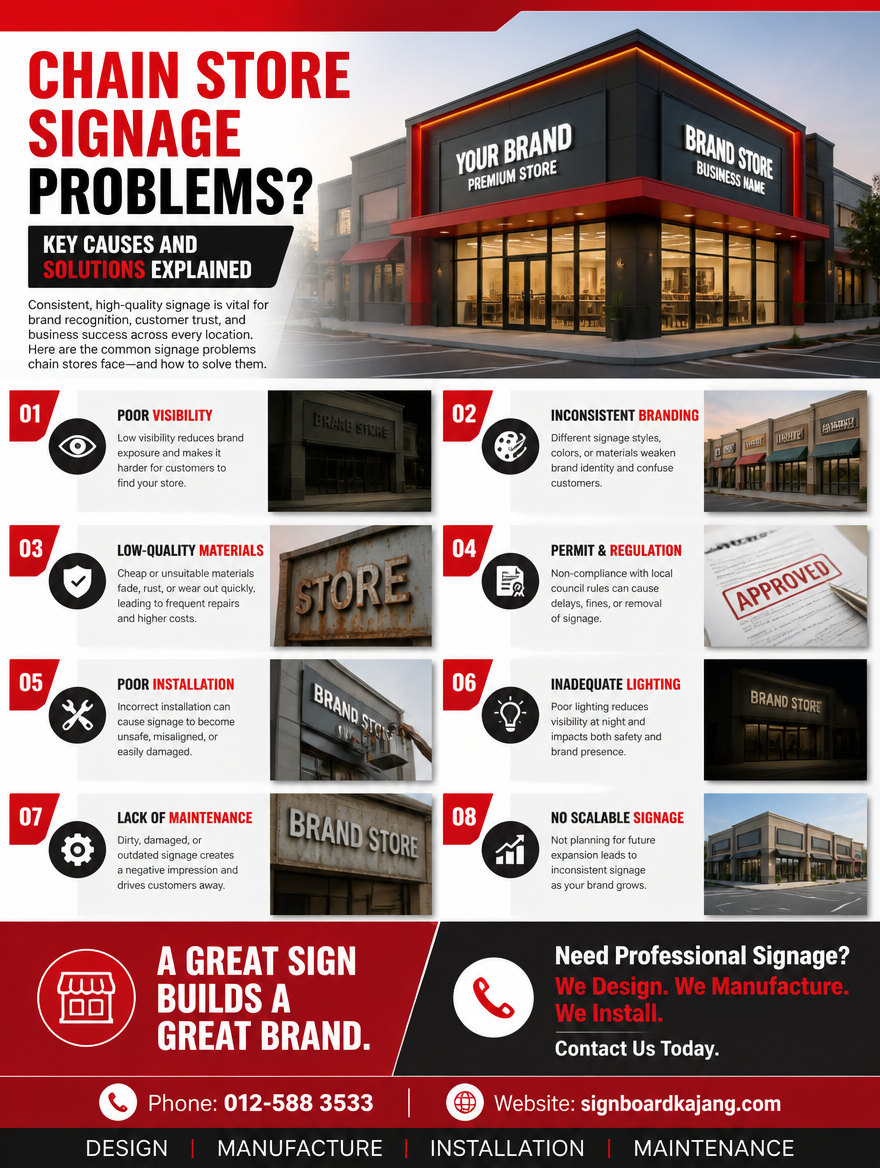
Most sign issues arise when individual branches source local suppliers independently: material quality varies (outdoor-grade vs indoor-grade), films/inks/LED modules differ in brand and specifications, manufacturing processes and installation methods are inconsistent, and maintenance responsibilities are scattered. Even within the same chain, signs can look very different from store to store, compromising overall brand consistency.
2. Inconsistent Material Standards
When different suppliers use different materials, common problems include using non-calendered PVC (causing bubbling), inks that aren't UV-resistant (leading to rapid fading), and lack of UV protective laminate (causing color loss within six months). These are systemic problems caused by inconsistent material standards across the chain.
3. Different Locations, Same Installation Method
Chain store outlets in different cities face vastly different environmental conditions—intense western sun exposure, high humidity, or locations near kitchen smoke. If installation methods are not adjusted, problems include water accumulation inside lightboxes, poor LED heat dissipation, and sign structures deforming. Most of these issues only appear after several months, and repeated repairs rarely solve the root cause.
Top 5 Common Signage Issues in Chain Stores
- Sign Bubbling – Non-outdoor grade PVC, heat-intolerant adhesives, poor surface preparation
- Sign Fading – Non-UV-resistant inks, no UV protective laminate, indoor materials used outdoors
- Inconsistent Sign Colors – No unified Pantone/CMYK standards, different printing equipment per branch, LED color temperature varies
- Uneven LED Brightness or Rapid Failure – Inconsistent LED quality, incorrect power supply, insufficient heat dissipation
- Frequent Repairs and Unclear Responsibility – Multiple suppliers shift blame, lack of standardized maintenance procedures, no long-term inspection plan
Long-Term Solution: Standardize from the Source
The most effective solution isn't constant replacement—it's establishing a unified standard and supply system from the start. Choosing a supplier with multiple own factories across Peninsular Malaysia ensures all outlets use the same materials, manufacturing processes, and installation standards; fast and consistent installation and maintenance; uniform color, brightness, and structure (reducing repair costs); and strengthened brand consistency and improved long-term ROI.
How a Peninsular Malaysia-Wide Unified Supply System Solves Long-Term Signage Issues
We operate four in-house factories across Peninsular Malaysia—Klang (Headquarters), Kuantan, Penang, and Johor Bahru (JB). By combining standardized production with local installation, we ensure chain store signs use the same material grade with consistent weather resistance, maintain uniform color and structure across all locations, follow standardized installation procedures adapted to different environments, and benefit from efficient maintenance with clear responsibility. No matter where your stores are located, every sign reflects a consistent brand image.
Why Chain Brands Benefit More from a Nationwide Signage Manufacturing System
A unified supply system offers significant advantages: lower repair rates, more controlled expansion costs, reduced management complexity, consistent brand image, and higher customer trust. Mature chain brands, after reaching a certain scale, often stop allowing each store to find its own signage supplier and instead establish a long-term, unified signage partnership.
Conclusion: Signs Are Not Consumables – They Are a Chain Brand Asset
Bubbling, fading, and color inconsistencies often reflect whether a chain brand has a stable and replicable signage system. Rather than repeatedly patching problems at individual outlets, establish a unified, scalable signage system from the start: choose a supplier with nationwide coverage and standardized manufacturing, standardize materials, processes, and installation methods, and ensure every outlet's sign meets high brand standards.
FAQ
1. If different suppliers make the same sign with the same materials, can colors still vary?
Yes. Differences in printing equipment, ink batches, and production processes can cause color variations. Using a single, unified supplier prevents this issue.
2. If an LED bulb fails, can individual branches replace it themselves?
Not recommended. Replacements should be done by head office or the unified supplier to ensure consistent brightness across all locations.
3. What if the sign's brightness is uneven at night?
Standardize the LED brand and power and perform brightness testing before installation.
4. If a branch updates its advertising content, does it need re-approval?
Usually not, as long as the color, material, and dimensions remain unchanged.
5. What should chain stores consider when expanding across cities regarding signage approval?
Different city councils have different regulations. Prepare standardized design files and material lists in advance to ensure smooth approvals.
Call / WhatsApp Us: 012-588 3533 Website: signboardkajang.com
Disclaimer: Information provided is for reference only. We do not bear responsibility for any inaccuracies or consequences arising from its use.