Please login to use this feature.
You can use this feature to add the product to your favourite list.
Close
You have removed this product from your favourite list.
Close
Please login to use this feature.
You can use this feature to add the company to your favourites list.
Close
This company has been removed from your favourite list.
Close
Please login to use this feature.
You can use this feature to add the company to your inquiry cart.
Close
This company has been added to your inquiry cart.
Close
This company has been removed from your inquiry cart.
Close
This product has been added to your inquiry cart.
Close
This product has been removed from your inquiry cart.
Close
Maximum number of Product/Company has been reached in inquiry cart.
Close
You have removed this product from your favourite list.
Close
Daily Login Reward
Congratulations!
You¡¯ve earned your daily login reward for today!
5 NP PointHere are the reward you¡¯ve earned!
Check your Daily Login Rewards
Be sure to come back everyday for more rewards!
Thanks!
Scan and Whatsapp Me
![qr code]() Note: Some mobile phone default QR scanners cannot scan to open the WhatsApp App directly.
Cancel
Note: Some mobile phone default QR scanners cannot scan to open the WhatsApp App directly.
Cancel
Compostable Corn Straw - PMI Packaging Sdn Bhd
Compostable Corn Straw
Compostable Corn Straw
PMI compostable range of straws made from 100% plant-based PLA (corn starch)
As the name implies, corn starch compostable are made from corn starch.
the starch is converted into a polymer, the main ingredient in materials that
have a plastic-like feel. The plastics can be clear or opaque, soft or hard. A
kind of acid called polylactic acid (PLA) is made from the corn starch. This i
s why corn starch biocompostables are sometimes called PLA plastics. |
|
 |
|
|
|
|
Wrapping
|
Packaging
|
|
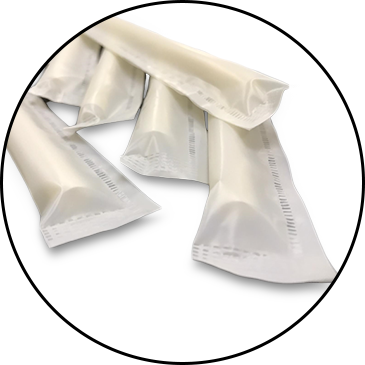
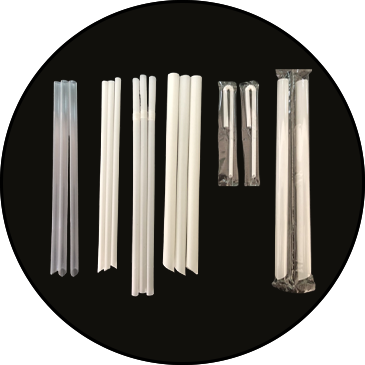
Individual single-piece transparent
or corn film wrapped to meet the different
consumer groups demands.
|
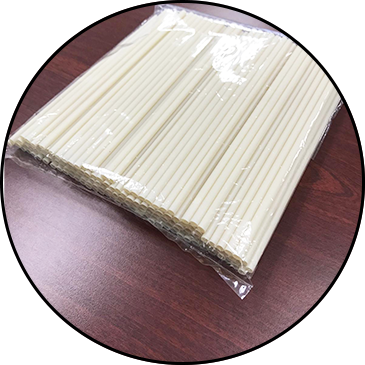
Individual single color or
multi color packaging
in retail box pack.
|
|
|
|
|
Material
|
Customized Size
|
|
100% plant-based renewable
resources (Com Starch).
Also known as PLA (polylactic acid).
|
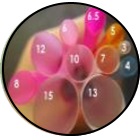
Our range starts from
5.5mm up to our 12mm straw-perfect for
slurping smoothies or bubble tea.
|
|
|
|
|
Certified Standard
|
|
|
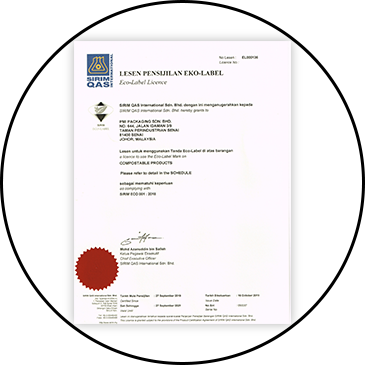
SIRIM, Din-Certo,
BPI, OK Compost,
KWP, Compostable.
|
|
Biodegradable and Compostable
|
|
A biodegradable material is not necessarily compostable. A compostable material is always biodegradable. |
Biodegradable
|
Biodegradable refers to the ability of a substance to break down into
small enough parts so that microorganisms can consume it. Biodegradable
products break down naturally when placed in a land fill, if given enough time.
“Bio” meaning “life,” “degrade” meaning to break down, and “able” of course
meaning that it can happen. |
 |
|
Biodegradable Cycle Chart
|
|
|
Breaks down into
smaller sized pieces
|
|
|
Requires heat, water,
oxygen and micro organisms
but may never
fully break down.
|
|
May take decades
to disappear |
|
|
Plastics biodegrade
into smaller pieces
of plastic over
a longer period
of time.
|
|
|
|
 |
Compostable refers to the ability of a microbes to break down materials.
Products that compost leaves no visible, distinguishable or toxic residue
and generally help improve the soil. Composting is the process of recycling
organic waste so that it can eventually be reused. |
|
|
|
Compostable Cycle Chart
|
|
|
Breaks down into
non-toxic components
|
|
|
Requires heat, water,
oxygen and micro organisms
to fully break down
|
|
Breaks down completely
and does not harm
plant growth |
|
|
Bio based materials break down
faster as long as the right
condition are met
|
|
What is the real difference for Plastic, PLA, Paper and Steel Straws ?
|
|
The environmental impact from discarded plastic straws has drawn attention of consumers around the world. The globalconsumermovement targeting single-useplastic straws is completely justified.We are strong advocates for sayingno to plastic by providingbiodegradable andcompostablestraws. However,before we can change consumer behaviour,it’s important for people to understand the difference betweencommon straw products andassociated environmental impacts. |
|
Difference Between Common Straws
|
|
Plastic Straws
|
 |
|
-
One time use, end up in the landfill and pollute communities.
-
Plastic is not enenvironmentally friendly.
-
Contains BPA or other toxins that leach into our food and damages our health.
-
Made out of petroleum BI-product polypropylene.
-
When exposed to hot water or steam, plastic straws can easily melt and leak toxins.
-
Take up to 200 years to decompose.
|
|
|
PLA Straws
|
 |
|
-
PLA stands for Polylactic Acid which is made from renewable resources, such as sugarcane or corn starch.
-
It decomposes forming carbon dioxide and water, which present no danger to the environment.
-
Unlike recycling, no chemicals or processes are required to dispose of a biodegradable straws.
-
Composting is a natural process of degradation of plant and animal material and returns nutrients back to the soil.
|
|
|
Paper Straws
|
 |
|
-
Paper straws getting soggy too quickly.
-
Colour of paper straws leachinginto drinks after few hours.
-
Paper is biodegradable, unfortunately it won’t break down even after a very long time if it contains a lot of pulp.
-
Price are slightly expensive due to customizable design, colourand shape.
-
Requires cellulose and if procured from vegetation which involves trees then it adds to the problem differently.
|
|
|
Steel Straws
|
 |
|
-
Can’t see the liquid coming up the straw.
-
Not convenient with little kids to see if they actually are drinking.
-
Drinking a cold smoothie? The straw gets super cold.
-
Washing the straw in hot water? Careful, don’t burn yourself.
-
Most expensive investment if you are in huge usage.
-
Might be hard on sensitive teeth. May have sharp edges.
|
|
|
Features of Compostable Constraw
 |
 |
 |
|
Compostable |
Biodegradable |
Eco-Friendly |
 |
 |
 |
|
Plant-Based Material |
Don't Get Soggy |
Chlorine Free |