


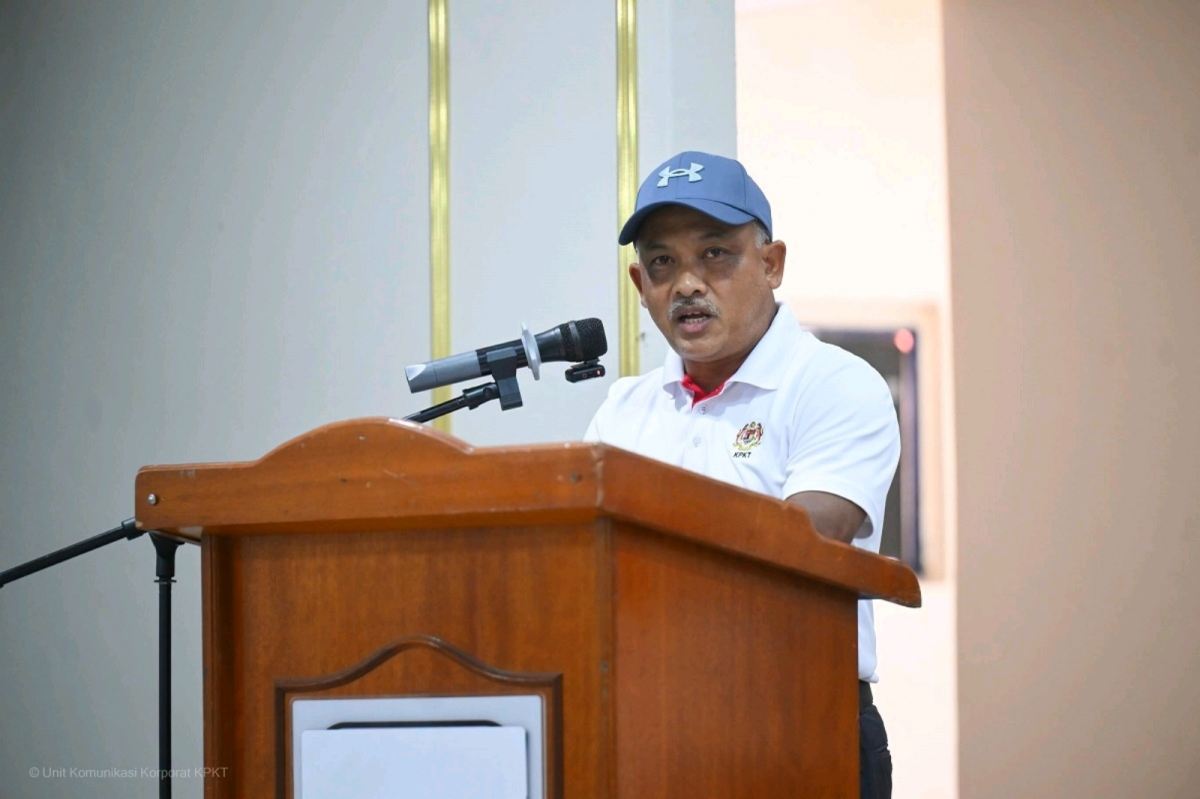
Fifty recipients in the Kuala Terengganu and Kuala Nerus parliamentary constituencies have received assistance under the Rumah Mesra Rakyat (RMR) programme, comprising 30 completed homes and 20 new offer letters for house construction. The presentation took place during a working visit by Housing and Local Government Ministry (KPKT) secretary-general Datuk Dr M Noor Azman Taib at Dewan Ehsan, Felda Wilayah Timur.
According to M Noor Azman, the RMR programme, implemented by Syarikat Perumahan Negara Berhad (SPNB) under KPKT, reflects the government’s continued commitment to assisting lower-income households, particularly landowners who do not yet have proper housing, in achieving home ownership.
He said the programme goes beyond providing physical housing, serving instead as a long-term initiative to improve quality of life through access to safe, comfortable, and affordable homes. It also contributes to broader goals of strengthening family well-being and community development.
Under Budget 2026, the government is targeting the construction of 6,545 RMR units nationwide. So far, 3,900 units have been implemented, with 2,478 completed and handed over to recipients, while 1,422 units are currently under construction.
In Terengganu, a total of 680 RMR units are being implemented with an allocation of RM46.67 million. As of May, 246 units had been completed and handed over, while another 154 units are still under construction.
In the Kuala Terengganu parliamentary constituency, 34 RMR units have been implemented, with 18 completed and 16 in progress. In Kuala Nerus, 32 units have been implemented, including 25 completed and seven under construction.
Since its introduction in 2002, the RMR programme has benefited more than 80,000 families nationwide by providing improved access to safe and quality housing.
What I Learned
This update shows that Malaysia’s Rumah Mesra Rakyat programme remains an important tool in supporting home ownership among lower-income groups, especially those who already own land but lack the financial capacity to build homes.
It also highlights a steady implementation pipeline, where projects are divided into completed units, ongoing construction, and new approvals, reflecting structured delivery rather than one-off assistance.
For policymakers and housing stakeholders, the key takeaway is that long-running housing assistance programmes like RMR continue to play a significant role in addressing housing accessibility gaps, particularly in semi-rural and rural constituencies.