


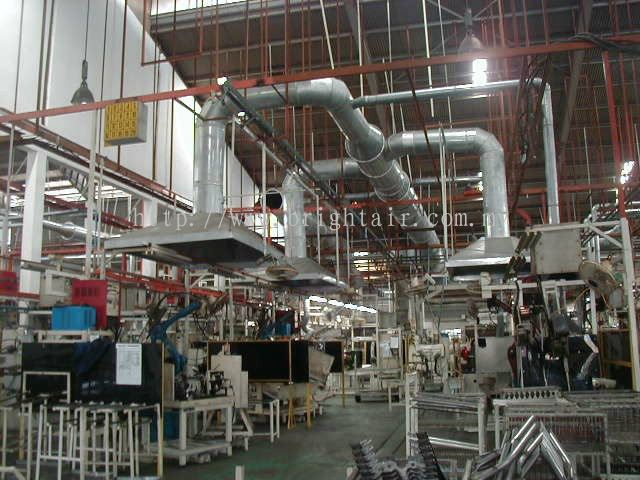

Industrial Ventilation & Direct Exhaust System
Control fumes, heat, dust, and odors with an Industrial Ventilation & Direct Exhaust System designed to capture contaminants at the source—using engineered hooding, ducting, fans, and safe discharge to protect people and processes.
Why install direct exhaust ventilation in factories?
Good ventilation reduces exposure to fumes and airborne particles, improves comfort in hot areas, and supports stable production by keeping workspaces cleaner and more visible.
Better Indoor Air Quality
Remove fumes and haze quickly to improve visibility and reduce lingering odors.
- Lower fume buildup near workstations
- Cleaner air in production zones
- Improved comfort for operators
Supports Safety & Housekeeping
Reduce airborne settling that can create residue on floors, machines, and surfaces.
- Less dust deposition on equipment
- Reduced odor spread between areas
- Helps maintain cleaner production lines
Flexible for Many Processes
Suitable for localized sources or multi-point extraction across a facility.
- Welding, soldering, and cutting
- Painting prep areas and mixing zones
- Heat and smoke extraction
- Welding fume extraction hoods
- Machine mist/smoke exhaust
- Battery charging room ventilation
- Heat extraction for ovens/lines
- Dusty processes (with pre-filtration)
- General exhaust for production areas
How does an Industrial Ventilation & Direct Exhaust System work?
The system captures contaminated air through a hood or pickup point, transports it via ducting, and uses an exhaust fan to discharge air outside. Good design focuses on capture efficiency, airflow balance, and safe discharge location.
Main components (typical)
- Hood / inlet (canopy, slot hood, side draft, enclosure pickup).
- Ducting (proper diameter, smooth routing, controlled velocities).
- Fan / blower (selected for required airflow and static pressure).
- Accessories (dampers, flexible connectors, silencers if needed).
- Discharge stack (height and location to reduce re-entrainment).
What you get
- More effective fume control at source points
- Balanced extraction across multiple stations
- Improved comfort by removing heat and odors
Design note: The hood design and capture velocity are often more important than “bigger fan power.” Correct pickup positioning can dramatically improve performance.
What maintenance does a direct exhaust system need?
Routine checks keep airflow stable and prevent efficiency loss from duct buildup, loose connections, or fan wear. A simple maintenance plan helps ventilation performance stay consistent throughout the year.
Routine checks
- Inspect hood positions and ensure capture area is not blocked
- Check duct joints, hangers, and vibration points
- Verify fan belt condition (if belt-driven) and listen for abnormal noise
Even minor duct leaks can reduce extraction at the hood.
Performance & cleaning
- Measure airflow periodically (or check pressure indicators)
- Clean accumulated dust/oil residue in ducting where applicable
- Confirm discharge outlet is clear and protected from rain entry
If extraction drops, checking dampers and duct restrictions is a fast first step.
FAQ
Common questions about industrial ventilation design, exhaust routing, and system performance.
Note: Always follow your facility’s safety procedures and local regulations for ventilation, discharge routing, and emissions control.



