


Here are some other things you should know about flies and fly control:
• Depending on the species, the life expectancy of a fly is eight days to two months or, in some cases, up to a year.
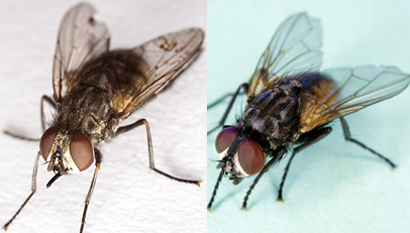
• Flies belong to the order Diptera, meaning two wings.
• Flies plague every part of the world except the polar ice caps.
• One pair of flies can produce more than 1 million offspring through their offsprings’ offspring in a matter of weeks.
• Millions of microorganisms may flourish in a single fly’s gut, while a half-billion more swarm over its body and legs.
• Flies spread diseases readily because they move quickly from rotting, disease-laden garbage to exposed human foods and utensils.
• Because they only have two wings, flies land often and therefore can deposit thousands of bacteria each time they land.
• Every time a fly lands, it sloughs off thousands of microbes. If a fly lands on food or utensils, customers may ingest germs that can trigger serious illness such as diarrhea, food poisoning, meningitis and bloodstream infections.
HOW TO CONTROL
- BAITING
Bait is a mixture of food attractant and insecticide in order to lure the fly to feed on it and subsequently being poisoned. This approach is environmental-friendly and is safe to be used at sensitive areas such as the pantry, kitchen, poultry farm, etc.
- INSECT LIGHT TRAP
The common house flies are attracted to a certain light spectrum such as the ltra violet light. Flies that are attracted to it will adhere to the sticky sheet located inside the light trap.
- SANITATION
A good sanitation control will help to reduce and prevent any infestation.



