


Which Thread Type Should You Choose for Industrial Applications?
When selecting bolts for construction, machinery, maintenance, or engineering projects, many people focus on bolt size, material, and strength grade. However, one important factor is often overlooked — thread type.Understanding the difference between coarse threads and fine threads can help improve fastening performance, reduce maintenance issues, and ensure long-term reliability.
In this guide, we explain the differences between coarse and fine thread bolts, their advantages, applications, and how to choose the right thread type for your project.
What Is a Bolt Thread?
A bolt thread is the helical ridge that wraps around the bolt shaft and engages with a nut or threaded hole.
The thread design determines how the fastener grips, tightens, and performs under load.
The two most common thread types are:
- Coarse Thread
- Fine Thread
What Is a Coarse Thread?
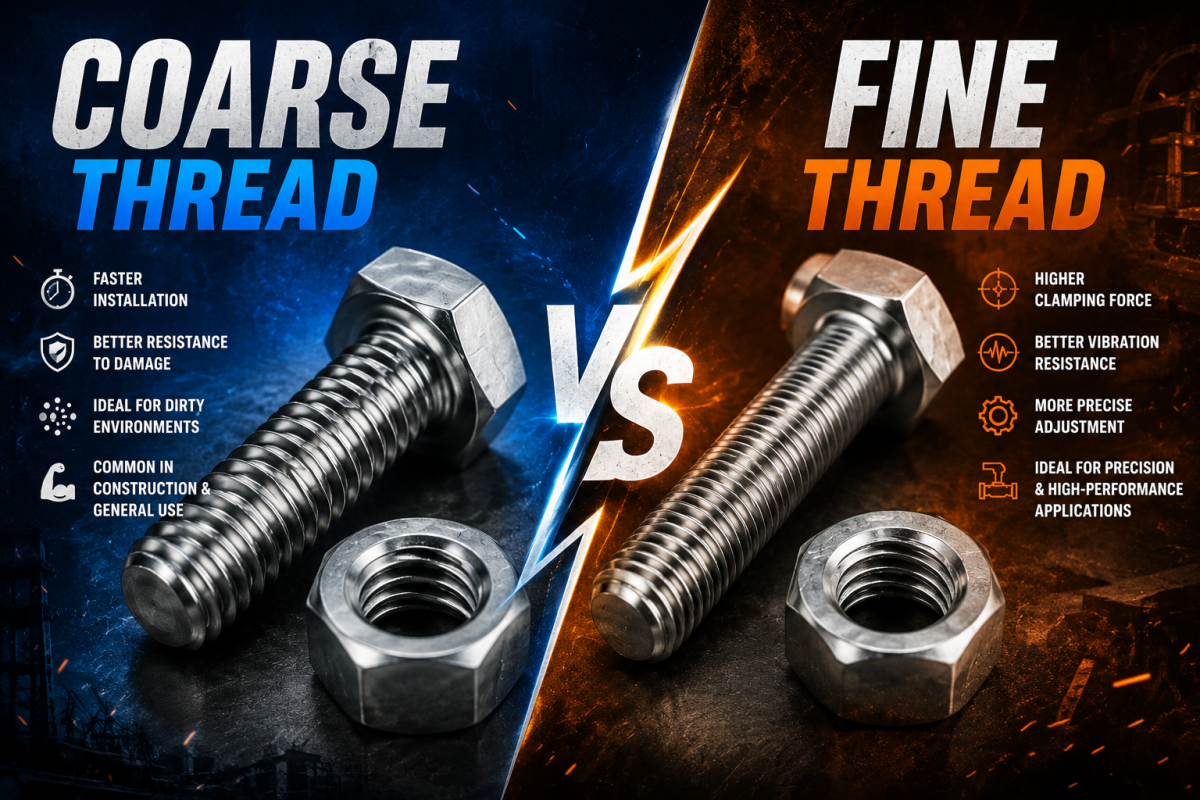
Coarse threads have fewer threads per inch (TPI) or a larger thread pitch.
The distance between each thread is greater compared to fine threads.
Characteristics of Coarse Threads
Larger thread spacing
Faster installation
Better resistance to thread damage
Easier assembly in dirty environments
More commonly available
Common Applications
- Construction projects
- Structural steel
- General machinery
- Equipment assembly
- Outdoor installations
What Is a Fine Thread?
Fine threads have more threads per inch (TPI) or a smaller thread pitch.
The threads are closer together and provide more engagement between the bolt and nut.
Characteristics of Fine Threads
Increased clamping force
Better vibration resistance
More precise adjustment
Improved load distribution
Stronger hold in thin materials
Common Applications
- Automotive components
- Hydraulic systems
- Precision machinery
- Aerospace applications
- High-vibration equipment
Coarse Thread vs Fine Thread: Key Differences
| Feature | Coarse Thread | Fine Thread |
|---|---|---|
| Installation Speed | Faster | Slower |
| Vibration Resistance | Good | Excellent |
| Thread Strength | Good | Excellent |
| Damage Resistance | Excellent | Moderate |
| Dirt Tolerance | Excellent | Moderate |
| Precision Adjustment | Moderate | Excellent |
| Maintenance Friendly | Excellent | Good |
Why Coarse Threads Are Commonly Used in Construction
Construction environments are often exposed to:
- Dust
- Dirt
- Rust
- Weather conditions
- Site installation challenges
Typical applications include:
- Structural Steel Connections
- Anchor Bolt Installations
- Warehouse Construction
- Industrial Platforms
- Roofing Structures
Why Fine Threads Are Preferred for Precision Applications
Fine threads provide greater thread engagement and higher clamping force.
This makes them suitable for:
- Pumps
- Compressors
- Hydraulic Equipment
- Industrial Machinery
- Automotive Components
Which Thread Type Is Stronger?
One of the most common questions asked by engineers and maintenance personnel is:
Are fine threads stronger than coarse threads?
The answer depends on the application.
Fine threads generally provide:
Higher clamping force
Better vibration resistance
More precise tightening
However, coarse threads offer:
Better durability in harsh environments
Easier installation
Greater resistance to thread damage
For most general industrial applications, coarse threads provide excellent performance and reliability.
Common Fastener Standards
Metric Coarse Thread
Examples:
- M8 x 1.25
- M10 x 1.5
- M12 x 1.75
Metric Fine Thread
Examples:
- M10 x 1.25
- M12 x 1.5
- M16 x 1.5
Quick Selection Guide
Choose Coarse Threads When:
Installing structural steel
Working in dusty environments
Performing general maintenance
Installing machinery
Faster assembly is required
Choose Fine Threads When:
Higher clamping force is needed
Precision adjustment is required
Equipment experiences vibration
Working with hydraulic systems
Space is limited
Conclusion
Both coarse and fine thread bolts have their advantages.
Coarse threads are ideal for construction, steel structures, general maintenance, and industrial applications where durability and ease of installation are important.
Fine threads are better suited for precision machinery, hydraulic systems, and applications requiring higher clamping force and vibration resistance.
Understanding the difference between coarse and fine threads helps engineers, maintenance teams, and purchasing personnel select the right fastener for safer, more reliable, and longer-lasting installations.
For industrial fastener solutions in Malaysia, selecting the correct thread type is just as important as choosing the correct bolt grade, material, and coating.




