


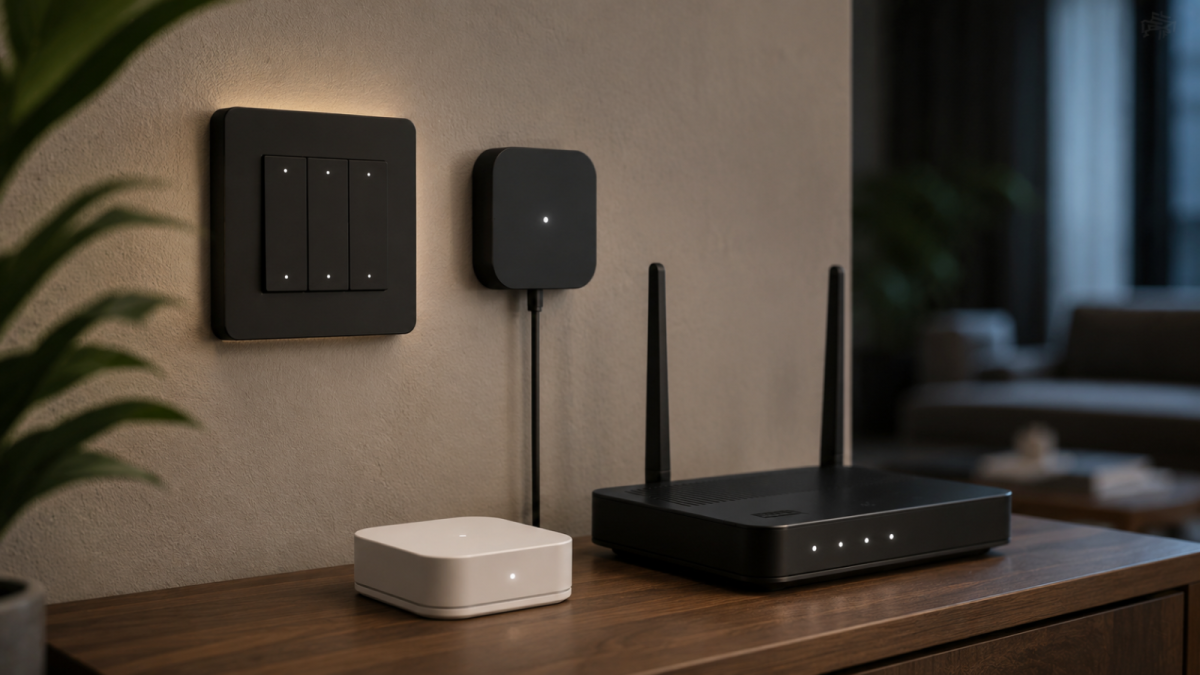
Smart Switch Control by Phone: Wi-Fi vs Zigbee Explained Simply
If you're looking for smart switch control by phone, you'll likely come across two common technologies: Wi-Fi and Zigbee. The simple difference is that Wi-Fi smart switches connect directly to your home network, while Zigbee smart switches communicate through a smart hub or gateway, often providing better scalability and stability for larger smart home systems.
Many Malaysian homeowners researching smart home solutions become confused by technical terms like Wi-Fi, Zigbee, hubs, gateways, and automation protocols. Fortunately, understanding the basics can help you make a smarter decision when planning a smart home system.
What Is Smart Switch Control by Phone?
A smart switch allows you to control lighting and connected electrical devices using a smartphone, tablet, control panel, automation routine, or voice assistant.
Instead of relying solely on traditional wall switches, users can:
-
Turn lights on or off remotely
-
Create lighting schedules
-
Set automation scenes
-
Control multiple switches from one app
-
Integrate lighting with other smart home devices
Smart switches are often one of the first upgrades homeowners make when building a smart home.
What Is a Wi-Fi Smart Switch?
A Wi-Fi smart switch connects directly to your home's wireless network.
This means:
-
No separate hub is usually required
-
Setup is often straightforward
-
Smartphone control can be configured quickly
-
Suitable for smaller smart home projects
How Wi-Fi Smart Switches Work
The switch communicates directly with your Wi-Fi router.
Typical setup:
Smart Switch → Wi-Fi Router → Mobile App
This direct connection makes Wi-Fi switches popular among homeowners who want simple smart control without additional hardware.
Advantages of Wi-Fi Smart Switches
Easier Installation
Most Wi-Fi switches can be installed and configured without requiring a dedicated gateway.
Lower Initial Cost
Since a hub is often unnecessary, the upfront investment may be lower.
Suitable for Small Smart Homes
Wi-Fi switches work well when controlling a limited number of devices.
Common examples include:
-
Living room lighting
-
Bedroom lights
-
Porch lighting
-
Individual rooms
Limitations of Wi-Fi Smart Switches
As the number of smart devices grows, Wi-Fi networks can become more crowded.
Potential challenges include:
-
Increased network traffic
-
More devices competing for bandwidth
-
Higher router workload
-
Reduced scalability for large smart homes
For homeowners planning extensive automation, these limitations may become more noticeable over time.
What Is a Zigbee Smart Switch?
A Zigbee smart switch uses a dedicated wireless communication protocol designed specifically for smart devices.
Unlike Wi-Fi devices, Zigbee switches communicate through a smart hub or gateway.
Typical setup:
Smart Switch → Zigbee Gateway → Mobile App
The gateway acts as the central controller for connected smart devices.
How Zigbee Creates a Smart Home Network
One of Zigbee's biggest advantages is mesh networking.
In a Zigbee network:
-
Devices communicate with one another
-
Signals can be relayed across devices
-
Coverage can improve as more compatible devices are added
This design helps create a stable and efficient smart home ecosystem.
Advantages of Zigbee Smart Switches
Better Scalability
Zigbee is often preferred for larger smart home projects because it is designed to support many connected devices.
Examples include:
-
Smart switches
-
Smart lighting
-
Smart curtains
-
Motion sensors
-
Door sensors
-
Smart door locks
-
Environmental sensors
Reduced Wi-Fi Congestion
Because Zigbee devices do not rely on your primary Wi-Fi network for device-to-device communication, they help reduce router workload.
Faster Device Communication
Many Zigbee devices are optimized for low-latency communication and automation triggers.
This can improve responsiveness in smart home scenarios.
Stronger Automation Ecosystems
Zigbee is commonly used in more advanced smart home systems where multiple devices need to work together seamlessly.
Wi-Fi vs Zigbee: Side-by-Side Comparison
| Feature | Wi-Fi Smart Switch | Zigbee Smart Switch |
|---|---|---|
| Requires Hub | Usually No | Yes |
| Installation Complexity | Simple | Moderate |
| Suitable for Small Homes | Excellent | Excellent |
| Suitable for Large Smart Homes | Moderate | Excellent |
| Network Scalability | Limited | Strong |
| Automation Flexibility | Good | Excellent |
| Network Congestion | Higher Potential | Lower |
| Future Expansion | Moderate | Excellent |
Which Option Is Better for Malaysian Homeowners?
The answer depends on your long-term plans.
Choose Wi-Fi Smart Switches If:
You:
-
Want a simple smart switch setup
-
Have a smaller property
-
Need only a few smart devices
-
Prefer minimal hardware
Wi-Fi switches are often suitable for entry-level smart home projects.
Choose Zigbee Smart Switches If:
You:
-
Are planning a full smart home system
-
Want extensive automation
-
Expect future expansion
-
Intend to integrate multiple smart devices
Zigbee is often the preferred choice for homeowners seeking a more comprehensive smart living solution.
Smart Home Planning Matters More Than Technology
Many homeowners focus only on choosing between Wi-Fi and Zigbee.
However, successful smart homes are usually the result of good planning rather than a specific protocol.
Before choosing a system, consider:
-
Future device expansion
-
Lighting requirements
-
Aircond integration
-
Digital door lock compatibility
-
Security devices
-
Home automation goals
-
Renovation plans
A well-designed system should support your lifestyle, not just your devices.
Can Wi-Fi and Zigbee Work Together?
Yes.
Many modern smart home ecosystems support both Wi-Fi and Zigbee devices.
This allows homeowners to combine technologies based on their needs.
For example:
-
Wi-Fi aircond control
-
Zigbee smart switches
-
Zigbee sensors
-
Smart door locks
-
Smart lighting
-
Smart automation scenes
This hybrid approach often provides flexibility while maintaining system reliability.
Why Work With a Smart Home Solution Provider?
Choosing smart switches is only one part of building a connected home.
A professional smart home provider can help with:
-
Smart switch planning
-
Smart lighting design
-
Aircond integration
-
Digital door lock solutions
-
Automation setup
-
Future expansion planning
BrightStorm, backed by Chuan Seng Trading Sdn Bhd, provides smart home solutions that integrate smart switches, digital door locks, smart lighting, air-conditioning control, automation systems, and connected home technologies. Established in 1990, the company helps homeowners create practical and future-ready smart living environments throughout Northern Malaysia and West Malaysia.
Frequently Asked Questions
Is Zigbee better than Wi-Fi for smart switches?
Not necessarily. Zigbee is often better for larger smart home ecosystems, while Wi-Fi can be ideal for smaller installations.
Do Zigbee smart switches require a hub?
Yes. Zigbee devices typically require a compatible gateway or hub to communicate with your smartphone app.
Can I control both Wi-Fi and Zigbee switches from my phone?
Yes. Many smart home platforms support both technologies within a single ecosystem.
Which is better for future smart home expansion?
Zigbee is generally preferred for larger systems because it supports more devices efficiently.
Are Wi-Fi smart switches easier to install?
In many cases, yes. Wi-Fi switches often connect directly to your home network without requiring additional hardware.
Conclusion
In summary, both Wi-Fi and Zigbee smart switches allow convenient phone-based control of lighting and connected devices. Wi-Fi is often ideal for smaller, simpler smart home setups, while Zigbee is better suited for larger systems that require greater scalability and automation. The best choice depends on your current needs, future expansion plans, and overall smart home strategy.



