


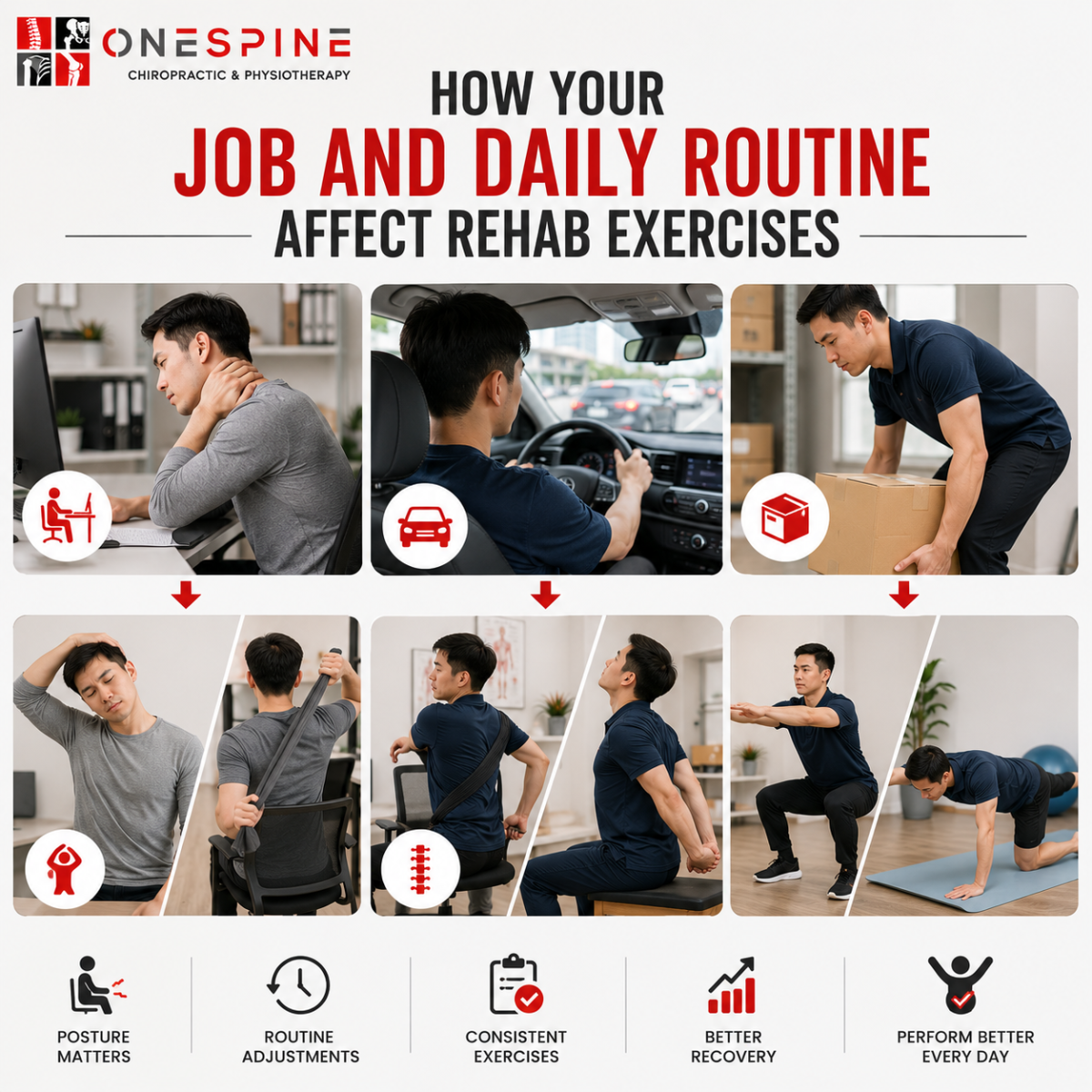
How Your Job and Daily Routine Affect Your Rehab Exercise Plan
Your rehab exercise plan should reflect what your body needs to do in daily life, including work, sitting, driving, lifting, housework, and exercise. At One Spine Chiropractic & Physiotherapy, our team helps patients in KL and PJ choose rehab exercises based on their assessment findings, lifestyle demands, movement ability, and recovery goals.
Rehab should not only focus on the painful area. A person who sits all day, a parent who carries a child, a driver stuck in traffic, and a gym-goer returning to training may all need different exercise progressions even if they feel discomfort in a similar area.
Why Daily Activities Matter During Rehab
Daily activities matter during rehab because your symptoms can be affected by what you repeatedly do outside the clinic. Sitting, standing, walking, driving, lifting, housework, exercise, and sleep habits can all influence how your body responds.
For example, a patient with back pain may feel better after treatment but still struggle after sitting at work for several hours. Another patient may feel fine at rest but notice discomfort when lifting groceries, climbing stairs, or exercising.
Our team also considers how body load before movement problems may affect pain, stiffness, and recovery planning.
| Daily Demand | What It May Affect | Rehab Exercise Focus |
|---|---|---|
| Desk work | Neck tension, shoulder stiffness, hip tightness, lower back fatigue | Posture control, mobility, core endurance |
| Long driving | Back stiffness, hip tightness, neck/shoulder strain | Sitting tolerance, hip mobility, spinal movement |
| Lifting or carrying | Back, shoulder, hip, or knee load | Strength, control, safe lifting pattern |
| Housework | Repeated bending, reaching, twisting | Movement control, pacing, mobility |
| Gym or sports | Higher load and impact | Progressive strengthening, balance, return-to-activity control |
| Parenting or caregiving | Carrying, bending, floor transfers | Functional strength, stability, safe movement habits |
How Desk Work Can Affect Rehab Exercise Choices
Desk work can affect rehab exercise choices because long sitting, laptop posture, and repeated screen use may contribute to neck tension, shoulder stiffness, hip tightness, and lower back fatigue. Office workers may need exercises that improve posture control, spinal mobility, shoulder movement, and core endurance.
For patients who sit for long hours, rehab may include:
- Gentle neck and upper back mobility
- Shoulder blade control exercises
- Hip mobility drills
- Core endurance exercises
- Posture and workstation advice
- Movement breaks during the day
A desk worker with neck stiffness may not need the same rehab plan as a person with a sports-related neck injury. Patients who sit for long hours can also read more about spine health for people who sit all day.
How Driving and Long Sitting Can Affect Recovery
Driving and long sitting can affect recovery because prolonged sitting may increase back stiffness, hip tightness, and neck or shoulder strain. This is especially common for KL and PJ patients who spend long periods in traffic or commute daily.
If driving is a major trigger, rehab may focus on:
- Sitting tolerance
- Hip mobility
- Lower back movement
- Neck and shoulder relaxation
- Core control
- Advice on driving posture and breaks
For example, a patient who feels back stiffness after driving may need a plan that includes hip mobility, spinal movement, and sitting strategies. Our article on why the back feels stiff after driving in KL traffic explains this common pattern in more detail.
How Lifting, Carrying, and Housework Change Rehab Needs
Lifting, carrying, and housework can change rehab needs because these activities often involve bending, twisting, reaching, squatting, or carrying weight. Parents, caregivers, active adults, and workers who lift tools or supplies may need more than simple stretching.
Rehab exercises may focus on:
- Safe bending and lifting patterns
- Hip and knee control
- Core stability
- Shoulder strength
- Grip and carrying tolerance
- Pacing repeated housework tasks
For example, a parent who lifts a child from the floor may need different exercises from an office worker who mainly sits. The goal is to build strength and control for the movements the patient actually performs each day.
How Sports, Gym Training, or Active Hobbies Affect Exercise Planning
Sports, gym training, and active hobbies affect exercise planning because the body must tolerate higher load, faster movement, impact, or repeated effort. Active patients may need progressive strengthening, balance work, mobility, and return-to-activity preparation.
Depending on the activity, rehab may include:
- Gradual loading
- Balance and coordination drills
- Sport-specific movement control
- Strength progression
- Mobility for restricted areas
- Advice on when to reduce, modify, or resume training
Patients returning to exercise should not only ask whether pain has reduced. They should also consider whether their body can control the movement, tolerate the load, and recover after activity.
Why Two Patients With the Same Pain May Need Different Exercises
Two patients with the same pain may need different exercises because their daily demands, movement habits, strength, posture, and goals may be different. The painful area is only one part of the rehab decision.
For example:
- A desk worker with lower back pain may need posture control and sitting tolerance exercises.
- A gym-goer with lower back pain may need hip control, loading guidance, and lifting technique work.
- A driver with neck stiffness may need mobility and sitting posture advice.
- A parent with neck stiffness may need shoulder strength and carrying control.
- A runner with knee pain may need balance, hip strength, and progressive loading.
- A worker with knee pain may need stair, squat, and lifting-related exercise practice.
This is why a personalized physiotherapy plan vs generic exercises can make a difference. Rehab should match the person, not just the symptom.
How Our Team Matches Rehab Exercises to Real-Life Demands
At One Spine Chiropractic & Physiotherapy, our team matches rehab exercises to real-life demands by asking about your routine, checking your movement, reviewing your exercise tolerance, and adjusting the plan based on your goals. We look at what you need to do at work, at home, in the car, and during exercise.
Our process may include:
- Asking about your job, sitting hours, driving time, and lifting needs
- Checking posture, walking, bending, squatting, or movement control
- Reviewing pain triggers and activity tolerance
- Testing strength, mobility, balance, and coordination when suitable
- Starting exercises at a safe level
- Progressing exercises based on symptoms, control, and confidence
- Adjusting home exercises when your routine or recovery stage changes
Before prescribing exercises, assessment matters. Patients can read more about assessment before physiotherapy exercises and why exercise selection should be based on the patient’s condition, not guesswork.
What to Tell Your Physiotherapist About Your Daily Routine
Tell your physiotherapist what your normal day looks like, especially the activities that trigger pain, stiffness, weakness, or fatigue. These details help our team choose exercises that fit your body and lifestyle.
Useful details to share include:
- Your job type and work posture
- How many hours you sit or stand each day
- How long you drive or commute
- Whether you lift children, groceries, tools, or heavy items
- Whether housework causes discomfort
- Your gym, sport, or hobby routine
- Sleep position and morning stiffness
- Movements that cause flare-ups
- Exercises that feel too easy, too hard, or painful
- Activities you want to return to
If your exercise plan changes during rehab, that does not mean your earlier plan was wrong. It may simply mean your body has adapted, your daily demands have changed, or your recovery goal has progressed.
Common Daily Routines and Rehab Focus Areas
Different lifestyles place different demands on the body. A good rehab plan should consider these patterns before exercises are progressed.
| Patient Routine | Common Rehab Consideration | Possible Exercise Focus |
|---|---|---|
| Office worker | Long sitting, rounded shoulders, neck tension | Posture control, upper back mobility, core endurance |
| Driver or commuter | Prolonged sitting, hip tightness, back stiffness | Hip mobility, spinal movement, sitting tolerance |
| Parent or caregiver | Carrying, bending, lifting from floor | Functional strength, safe lifting, stability |
| Gym-goer | Load, technique, repeated training stress | Progressive strengthening, movement control |
| Retail or service worker | Long standing, walking, repeated bending | Lower limb endurance, balance, mobility |
| Housework-heavy routine | Reaching, twisting, repeated tasks | Pacing, control, mobility, strength |
How Rehab Exercises Can Progress With Your Daily Demands
Rehab exercises may progress when symptoms improve, movements become easier, strength increases, or daily activities still feel difficult. Exercise progression should match both your recovery stage and the activities you need to return to.
Our team may progress exercises by:
- Increasing repetitions or resistance when control improves
- Changing the exercise position
- Adding balance or coordination challenges
- Practising movements linked to work or home tasks
- Modifying gym or sport activity temporarily
- Updating home exercises based on your progress
For patients receiving guided care, our physiotherapy and rehabilitation services may include exercise progression, movement retraining, strengthening, mobility work, and functional recovery planning.
Start With Rehab Exercises That Fit Your Lifestyle
Your rehab exercises should prepare your body for the activities you actually need to do, whether that involves sitting, driving, lifting, housework, work tasks, or exercise.
At One Spine Chiropractic & Physiotherapy, our team uses assessment findings and daily routine details to guide safer, more suitable rehab exercise planning.
Contact UsFrequently Asked Questions
Conclusion
In summary, your daily routine should guide better rehab decisions. Work posture, driving time, lifting needs, housework, sports, and lifestyle habits can all affect which exercises are suitable for your recovery.
At One Spine Chiropractic & Physiotherapy, we help patients in KL and PJ build rehab plans based on their condition, goals, and real-life activity demands.