


Why Static Stretching Is Not an Ideal Warm-Up — And What You Should Do Instead
For many years, static stretching holding a muscle in a lengthened position for 20–60 seconds has been treated as the “standard” warm-up before exercise.
You’ve probably seen it everywhere: touching your toes before a run, pulling your arm across your chest before lifting weights, or stretching your quad before a workout.
But modern evidence and clinical practice have shown that static stretching is not the most effective way to prepare your body for movement.
In fact, it may even reduce performance and increase the risk of moving poorly during your exercise session.
As a rehab and movement specialist, here’s why static stretching shouldn’t be your main warm-up strategy and what to do instead.
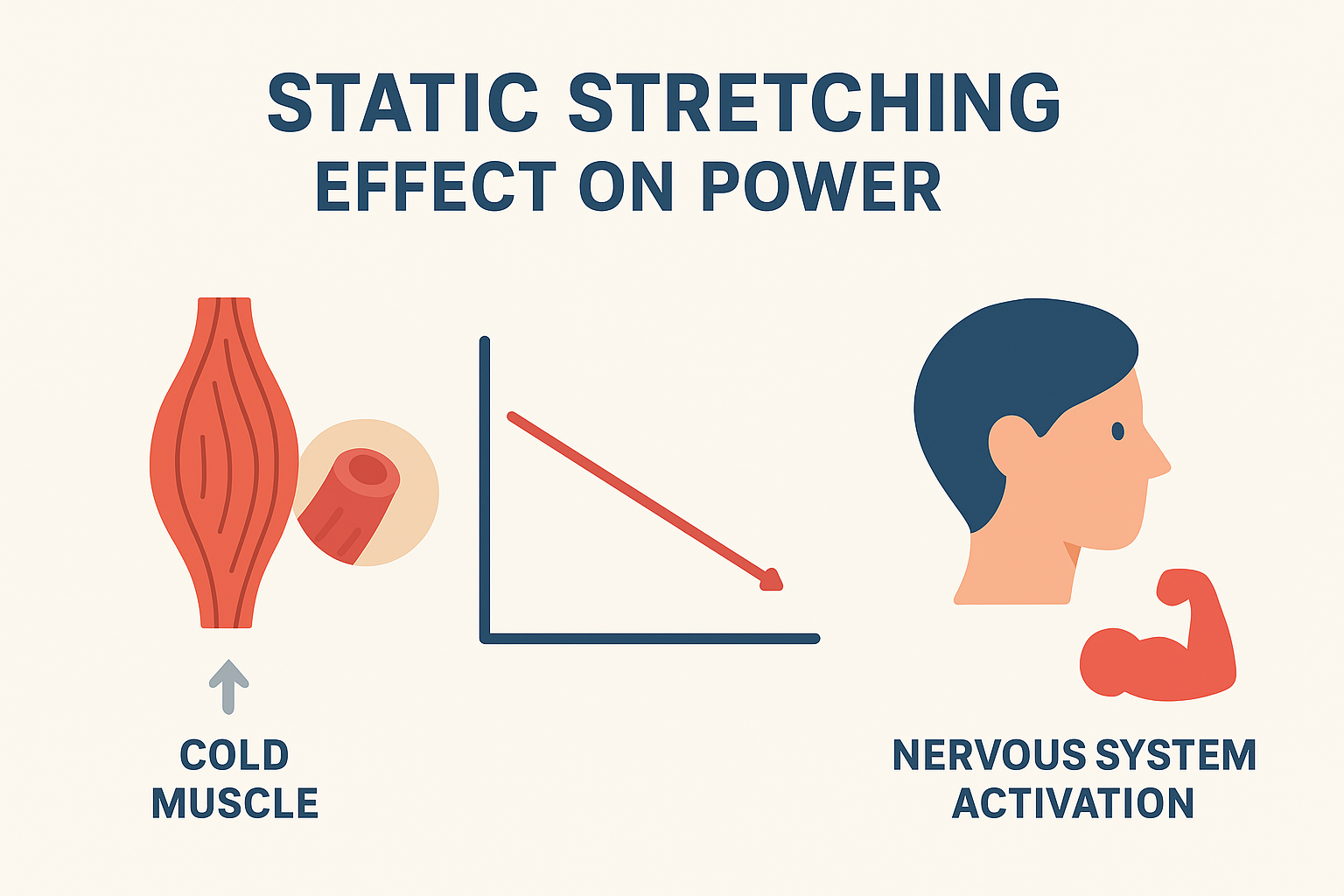
1. Static stretching temporarily reduces strength and power
Research consistently shows that holding long static stretches before training can temporarily decrease muscle strength, power, and reaction time.
Why this happens:
-
Static stretching relaxes the neuromuscular system
-
It lowers the muscle’s ability to generate quick, explosive force
-
It reduces muscle stiffness that’s necessary for elastic recoil
This means:
-
Slower sprint starts
-
Lower jump height
-
Weaker lifting performance
-
Less stability under load
For athletes or anyone doing strength or high-intensity workouts, this is not ideal as a warm-up.
2. Static stretching does not raise your core temperature
A “warm-up” should literally warm you up.
Static stretching doesn’t increase:
-
Heart rate
-
Blood flow
-
Body temperature
Your muscles stay “cold”, which means:
-
Slower nerve conduction
-
Less joint lubrication
-
Reduced coordination
It’s like starting your car and immediately revving the engine without letting it warm the system simply isn’t ready.
3. Static stretching doesn’t activate the right muscles
Warm-ups should prepare the movement patterns you’re about to use.
Static stretching:
-
Doesn’t activate stabilizing muscles
-
Doesn’t reinforce proper motor control
-
Doesn’t prepare your joints for load or speed
-
Doesn’t challenge balance or coordination
Modern warm-ups should be dynamic, functional, and movement-specific.
4. Static stretching can make hypermobile or unstable joints feel worse
Many people stretch because something feels “tight”.
But often, that sensation is due to:
-
Weak stabilizers
-
Poor joint control
-
Stiffness in other segments like thoracic spine or hips
Static stretching on an already unstable or irritated joint can lead to:
-
More pain
-
More instability
-
More compensation patterns
This is especially true for shoulders, hips, and lower backs.
So… should you never do static stretching?
Static stretching is not bad it’s simply misunderstood.
It is great for:
-
Cool-downs
-
Improving long-term flexibility
-
Relaxation and recovery
-
Reducing post-exercise stiffness
But it’s not ideal for preparing your body for performance or heavy movement.
What you should do instead: Dynamic Warm-Ups
A good warm-up should:
-
Increase your heart rate
-
Activate key stabilizing muscles
-
Improve joint mobility through active movement
-
Mimic the pattern of the upcoming exercise
-
Wake up your nervous system
Examples of dynamic warm-ups:
-
Arm circles, scapular movements
-
Cat-cow, thoracic rotations
-
Hip hinges, glute activation
-
Light cardio (jogging, cycling)
-
Dynamic lunges or squats
These prepare your body to move safely and powerfully.
Conclusion
Static stretching has its place but not at the start of your workout.
If your goal is performance, injury prevention, or improving your movement quality, a dynamic warm-up is the smarter and safer choice.
At our clinic, we emphasize movement preparation over passive stretching because we want every joint, muscle, and stabilizing system to be awake before you train.
This leads to better performance, better rehab outcomes, and better long-term body resilience.