


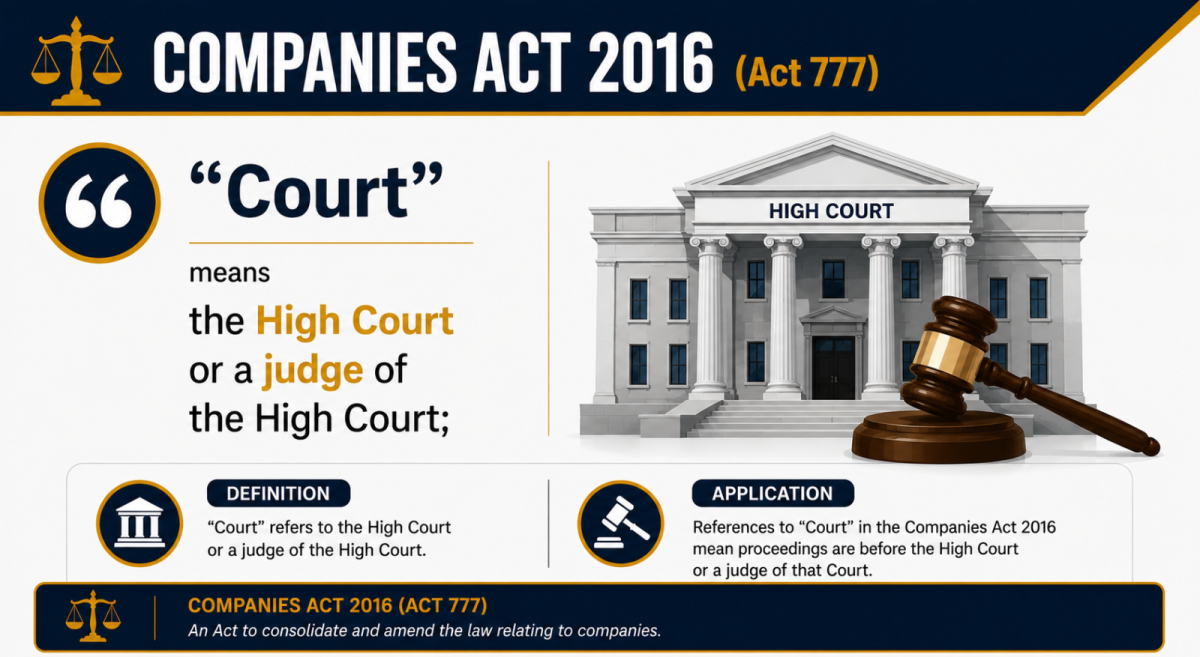
“Court” means the High Court or a judge of the High Court;
Under the Companies Act 2016, the term "Court" refers specifically to the High Court of Malaysia or a Judge of the High Court exercising jurisdiction under the Act.
The High Court has the authority to hear and determine matters arising under the Companies Act 2016, including disputes, applications, petitions, and proceedings relating to companies and their officers.
Where the Act requires an application to be made to the Court, it means the matter must be brought before the High Court or decided by a Judge of the High Court.
________________________________________
Jurisdiction of the Court
The High Court has jurisdiction over a wide range of corporate matters, including:
• Winding up (liquidation) of companies;
• Judicial management applications;
• Schemes of arrangement and corporate restructuring;
• Oppression and minority shareholder remedies;
• Rectification of company registers;
• Restoration of dissolved companies;
• Applications relating to directors' duties and powers;
• Enforcement of statutory rights and obligations under the Companies Act 2016; and
• Other matters specifically assigned to the Court under the Act.
________________________________________
Powers of the Court
The Court may, where authorised under the Companies Act 2016:
• Make orders concerning the management or affairs of a company;
• Appoint or remove liquidators and judicial managers where appropriate;
• Approve corporate restructuring and compromise arrangements;
• Grant injunctions or other equitable relief;
• Determine disputes involving shareholders, directors, creditors, and the company;
• Order the winding up or restoration of a company; and
• Exercise any other powers conferred by the Companies Act 2016.
________________________________________
Practical Examples
Example 1 – Winding Up Petition
A creditor files a petition to wind up a company that is unable to pay its debts.
The petition is heard and determined by the High Court, which may order the company to be wound up if the legal requirements are satisfied.
________________________________________
Example 2 – Minority Shareholder Action
A minority shareholder believes that the company's affairs are being conducted in an oppressive manner.
The shareholder may apply to the High Court for relief under the Companies Act 2016.
________________________________________
Example 3 – Scheme of Arrangement
A company proposes a restructuring of its debts through a scheme of arrangement.
The proposed scheme requires the approval of the High Court before it becomes legally effective.
________________________________________
Compliance Note
Where the Companies Act 2016 requires approval, permission, or an order of the Court, companies and interested parties must:
• File the appropriate application with the High Court;
• Comply with the procedural requirements prescribed by law and the Rules of Court;
• Provide the necessary supporting evidence and documents; and
• Comply with any order or direction issued by the High Court.
________________________________________
Importance
The definition of "Court" establishes that the High Court is the principal judicial authority responsible for interpreting and enforcing the Companies Act 2016. It ensures that significant corporate matters are determined by a superior court with the jurisdiction to safeguard the rights of companies, shareholders, creditors, directors, and other stakeholders, while promoting fairness, legal certainty, and the proper administration of Malaysian corporate law.
《2016 年公司法》
法院(Court)
“法院”(Court) 是指高等法院(High Court)或高等法院法官(Judge of the High Court)。
根据《2016 年公司法》,“法院”(Court) 专指马来西亚高等法院(High Court of Malaysia)或依法行使《2016 年公司法》司法管辖权的高等法院法官(Judge of the High Court)。
高等法院拥有审理及裁决《2016 年公司法》项下各类公司事务的司法权力,包括公司争议、申请、呈请(Petitions)及其他法律程序。
凡《2016 年公司法》规定某事项须向**法院(Court)**提出申请,即表示有关事项必须提交高等法院审理,或由高等法院法官依法作出裁定。
法院的司法管辖权(Jurisdiction of the Court)
高等法院对多项公司事务拥有司法管辖权,包括:
- 公司清盘(Winding Up / Liquidation);
- 司法管理申请(Judicial Management Applications);
- 债务重组安排及协议安排(Schemes of Arrangement and Corporate Restructuring);
- 少数股东权益受压迫救济(Oppression and Minority Shareholder Remedies);
- 公司登记册更正(Rectification of Company Registers);
- 已解散公司的恢复注册(Restoration of Dissolved Companies);
- 涉及董事职责及权力的申请(Applications Relating to Directors' Duties and Powers);
- 执行《2016 年公司法》赋予的法定权利及义务(Enforcement of Statutory Rights and Obligations);以及
- 《2016 年公司法》明确赋予法院审理的其他事项(Other Matters Specifically Assigned to the Court)。
法院的权力(Powers of the Court)
在《2016 年公司法》授权范围内,法院可依法:
- 就公司的管理或事务作出命令(Make Orders Concerning the Management or Affairs of a Company);
- 在适当情况下委任或罢免清盘人(Liquidator)及司法管理人(Judicial Manager);
- 批准企业重组及债务重整安排(Approve Corporate Restructuring and Compromise Arrangements);
- 发出禁制令(Injunction)或其他衡平法上的救济(Other Equitable Relief);
- 裁定涉及股东、董事、债权人与公司的争议(Determine Disputes Involving Shareholders, Directors, Creditors and the Company);
- 命令公司清盘或恢复注册(Order the Winding Up or Restoration of a Company);以及
- 行使《2016 年公司法》赋予法院的其他法定权力(Exercise Any Other Powers Conferred by the Companies Act 2016)。
例子一:清盘呈请(Winding Up Petition)
某债权人因公司无力偿还债务,向高等法院提出清盘呈请。
高等法院审理有关申请后,如认为符合法律规定,可颁令将该公司清盘。
例子二:少数股东诉讼(Minority Shareholder Action)
某少数股东认为公司的经营方式对其构成压迫或不公平损害其权益。
该股东可依据《2016 年公司法》向高等法院申请适当的司法救济。
例子三:协议安排(Scheme of Arrangement)
某公司拟透过**协议安排(Scheme of Arrangement)**重组其债务。
有关重组方案须取得高等法院批准后,方具有法律效力并可正式实施。
合规提示(Compliance Note)
凡《2016 年公司法》规定须取得法院批准、许可或命令时,公司及相关人士应确保:
- 向高等法院提交适当的申请(File the Appropriate Application with the High Court);
- 遵守《法院规则》(Rules of Court)及其他相关法律规定的程序要求;
- 提交所需的支持文件及证据;以及
- 遵守高等法院所作出的任何命令、判决或指示。
重要性(Importance)
“法院”(Court) 的定义明确指出,高等法院(High Court) 是负责解释、适用及执行《2016 年公司法》的主要司法机关。
透过赋予高等法院相关司法管辖权,《2016 年公司法》确保涉及公司、股东、董事、债权人及其他利益相关者的重要公司事务,均由具备充分司法权力的高级法院依法审理及裁决。
此制度有助于:
- 保障公司及各利益相关者的合法权益;
- 确保公司法获得统一及正确解释;
- 促进公平、公正及透明的公司治理;
- 提升法律确定性及市场信心;以及
- 维护马来西亚企业法律制度的健全发展。



